Login

Select travel dates to see prices

Excellent 4.87rating (36)

Sea turtle and cetaceans weeks experience

location
1 - 8 weeks  ·  Age 18 - 50+
Verified

Highlights

  • Learnt different methods for studying marine mammals in the wild and gaining practical experience of cetacean field research.
  • Have a deeper understanding of cetacean ecology, biology, behaviour and physiology
  • Learn to recognize several cetacean, and other marine fauna species of the Mediterranean Sea.

Highlights

  • Learnt different methods for studying marine mammals in the wild and gaining practical experience of cetacean field research.
  • Have a deeper understanding of cetacean ecology, biology, behaviour and physiology
  • Learn to recognize several cetacean, and other marine fauna species of the Mediterranean Sea.
  • Have a good understanding of standard procedures in fieldwork data collection and further possible analyses that can be developed
  • Visit Italy and the wonderful ligurian region

  • You don't have to pay anything yet

    Especially good for

    Age 18+
    Singles
    Couples
    Groups

    About the program

    This weekly program aims to provide participants with knowledge on various aspects of turtles and marine fauna research with both theoretical and practical activities

    This program aims to provide participants the basic knowledge on various aspects of cetacean and marine macrofauna research and the most important coastal monitoring techniques.
    Participants will take part in various theoretical and practical activities to improve their familiarity with monitoring ...

    About the program

    This program aims to provide participants the basic knowledge on various aspects of cetacean and marine macrofauna research and the most important coastal monitoring techniques.
    Participants will take part in various theoretical and practical activities to improve their familiarity with monitoring protocols of coastal environments, ID skills, and photo identification. Interns will be involved 5 days a week, 6-8 hours/day (depending on fieldwork or lab work), also during the weekend if the weather is good.

    - Land-based surveys will be conducted when good weather conditions allow. During these activities, the participant will gain familiarity with the protocols of data collection used on the field by researchers and will have the opportunity to contribute to the monitoring of the species within the study area. 

    - Boat-based surveyes if the weather and sea conditions allow, participants will be able to take part in a boat-based survey during which they will gain first-hand experience in collecting data on free-ranging cetaceans and improve skills in cetacean boat-based surveys. Fieldwork cannot be guaranteed before due to being weather-dependent. In the weekly program, we cannot guarantee to do fieldwork. The coordinators make every possible effort to switch between field and office work during the week, but this is not always possible due to the weather constraints. It can happen, for example, to go in the field 4 days a week or the opposite, to stay in the office for a whole week

    - office work includes transcription of data, data entry on laptop (transcription on Excel forms of all the data collected on the field), photo-id analysis and matching (main activity, organise and analyse the pictures of previous sightings of bottlenose dolphins, organise in subfolders and then match all the individuals with our catalogue of dorsal fins). Classwork duties last no longer than 6 hours a day. Different lessons will be made to the participants (see below details)

    - September weeks: In the event of sea turtle nesting, September typically marks the peak hatching period. This requires continuous 24/7 nest monitoring throughout the expected hatching window.
    Given the growing number of nests in our study area, the programme may shift its primary focus toward turtle monitoring. In this case, only boat surveys (weather permitting and with the previously mentioned flexibility) and a few training sessions will be conducted. Most nights will be dedicated to round-the-clock nest watch, including overnight stays near the nests, close observation of the hatching process and data collection during hatching. Daytime hours will generally be free for rest.
    Office activities may be cancelled or reduced to a minimum, depending on the number of active nests. If no nesting occurs, the programme will proceed as originally planned.

    The program is highly flexible and with possible last-minute changes due to the changeable weather. The program is not prior scheduled and the activities for the next day are often communicated in the evening (before 21:30). The coordinators make every possible effort to switch between field and office work during the week, but this is not always possible due to weather constraints. It can happen, for example, to go to the field 4 days a week or the opposite, to stay in the office for a whole week.

    During their free time, interns will have the opportunity to experience all sorts of activities: swimming, diving, hiking, exploring historical sites, visiting museums, and sailing.  

    Participants will assist researchers while working on board dedicated research vessels. Interns will be involved 5/6 days a week, 6-8 (up to 10-12 in case of fieldwork) hours/day (depending on fieldwork or office work), and also during the weekend if the weather is favourable. The programme is highly flexible and with possible last-minute changes due to the changeable weather. The programme is not scheduled in advance, and the activities for the next day are often communicated in the evening (before 21:30). The coordinators make every possible effort to switch between field and office work during the week, but this is not always possible due to the weather constraints. It can happen, for example, to go to the field 4 days a week or the opposite, to stay in the office for a whole week. Fieldwork can be scheduled at any hour; it can start at sunrise or end at sunset. Surveys are weather-dependent- dependent and our plans can change often even during one single day. Extreme flexibility is therefore an essential prerequisite. Remember that, even though the sighting probability in the Pelagos Sanctuary is very high, the chances of observing marine wildlife at sea are always unpredictable and not always guaranteed. Boat-based surveys and the use of binoculars at sea might cause seasickness.

    GENERAL INFORMATION 

    Our Team 
    Research and other activities will be conducted by a qualified team, which has more than 10 years of experience in marine fauna research all around the world. Research coordinators will oversee fieldwork and general project coordination, while intern coordinators or research assistants will help in all aspects of the project and coordination of the activity, housekeeping and interns’ responsibilities. 

    RESEARCH PROJECT

    Project Background
    In the Ligurian Sea, bottlenose dolphin has been extensively studied only in the Eastern area, between Genoa and La Spezia, which represents, for a series of features of the seafloor, a perfect habitat for this species. 

    On the contrary, in the Western part, no research organization or scientific foundation has conducted studies focused only on bottlenose dolphins because, due to the morphology of the sea bottom, sightings have always been more sporadic than the opposite side. The continental shelf is very narrow and short and high depths (around 2000 m) are reached close to the coast. This makes the area suitable for other cetacean species but not ideal for bottlenose dolphins, which tend to remain in coastal waters. 

    Since April 2018, the beginning of our project, we have been demonstrating that this species is regularly present all year round also in this part of the basin with a high occurrence and great numbers. The project is structured on an annual basis, to obtain data not only on the distribution during the Summer but also changes during the different seasons. Data from this study are being used to create a baseline for a long-term project, monitoring bottlenose dolphins in this part of the Ligurian Sea, information needed to suggest and create conservation plans for their protection.

    Marine Birds and Other Fauna Research Project
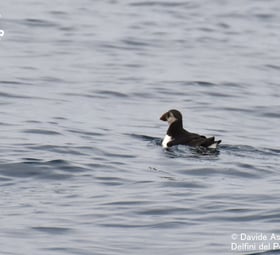
    During our surveys, we collect data on the presence of other cetacean species and on several species of marine birds, fishes and sea turtles that can be sighted. Our database of marine fauna provides interesting information about the seasonal presence of Mediterranean shearwaters (Puffinus yelkouan), Scopoli’s shearwaters (Calonectris diomedea), Northern gannets (Morus bassanus), Sandwich terns (Thalasseus sandvicensis), sunfish (Mola mola) among others.

    Research Topics 
    • Groups and social structure analysis: to study the interactions and associations between individuals 
    • Abundance: estimation of the local population size 
    • Distribution, occurrence and movements to understand if the animals perform movements and migrations, even seasonal, towards the neighbouring areas. 
    • Identification of hot spots or areas with greater importance. 
    • Identification of the main threats which dolphins may incur and therefore the creation of management and conservation plans for their protection. 
    • Interaction with fisheries 
    • Habitat modelling 
    • Skin lesion 
    • Distribution and occurrence of seabirds, with a focus on seasonal variability. 
    • Sea turtle monitoring (Pilot project on nests) 

    Methods and data collection 
    The project is a long-term coastal project. Data are collected during dedicated boat-based surveys conducted from a 5.2 m zodiac equipped with a 40 hp outboard engine, based in the port of Imperia, with 4/5 crew members. Surveys are carried out in favourable weather-marine conditions (Beaufort ≤3) around 10 times a month. The main effort is focused on collecting images, which will be used to identify the sighted animals, through the technique of photo-identification. Environmental conditions, marine traffic, geographical locations and dolphins' behavioural data are among the data collected at sea.

    The study area and the Pelagos Sanctuary 
    The study area, which extends from Capo Noli to the France border, from the coast to the bathymetric of 500m in depth is located in the Ligurian Sea, a basin that shows very particular features, especially in its Western part where it reaches remarkable depths very close to the shore. 

    In western Liguria, the continental shelf, which by definition extends from the shore to 200m deep, is little expanded and in a few nautical miles the bottom reaches more than 2500 meters in depth. The continental slope is crossed by many submarine canyons in the area. Other important oceanographic and climate parameters contribute to make this area unique for marine life. 

    Thanks to all these features the Ligurian basin is considered to have the highest presence of cetaceans in the whole Mediterranean Sea. For this reason, in 1999, the governments of Italy, France and the Principality of Monaco signed an agreement that sanctions the establishment of a marine protected area, called the International Pelagos Sanctuary. 

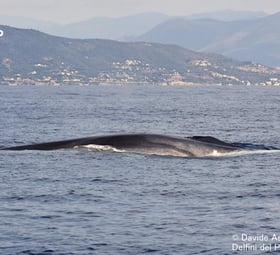
    The area, which extends for 96,000Km² houses regularly 8 cetacean species: fin whale, sperm whale, striped dolphin, bottlenose dolphin, pilot whale, common dolphin, Risso’s dolphin and Cuvier’s beaked whale. Mobula rays, sea turtles and several marine bird species are regularly present too. 


    Typical day

    Fieldwork (5-8 hours):
    BOAT-BASED SURVEYS: Interns will help and participate in collecting different kinds of data and actively searching for animals. Usually, a survey lasts from 5 to 8 hours and it is required to use binoculars for the majority of its duration. Fieldwork will help participants to ...

    Typical day

    Fieldwork (5-8 hours):
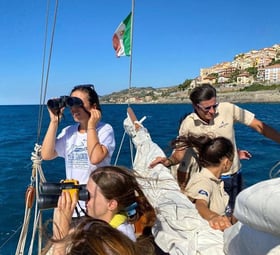
    BOAT-BASED SURVEYS: Interns will help and participate in collecting different kinds of data and actively searching for animals. Usually, a survey lasts from 5 to 8 hours and it is required to use binoculars for the majority of its duration. Fieldwork will help participants to gain first-hand experience in collecting data on free-ranging cetaceans and improve skills on cetacean boat-based surveys. Surveys are weather-dependent.

    LAND-BASED SURVEYS (2-3 hours):  It consists of the collection of environmental data, marine traffic, and dolphin presence from two different strategic points in Imperia.

    Fieldwork can be scheduled at any hour, it can start at sunrise or end at sunset. Surveys are weather-dependent- and our plans can change often even during one single day. Extreme flexibility is therefore an essential prerequisite. Remember that, even though the sighting probability in the Pelagos Sanctuary is very high, the chances of observing marine wildlife at sea are always unpredictable and not always guaranteed.

    Office work (6 hours) :
    Office work includes a transcription of data, data entry on the laptop (transcription on Excel forms of all the data collected on the field), photo-id analysis and matching (main activity, organising and analysing the pictures of previous sightings of bottlenose dolphins, organising in subfolders and then match all the individuals with our catalogue of dorsal fins).
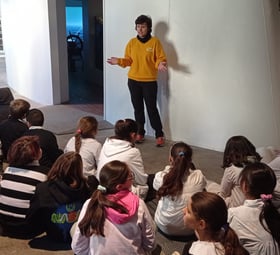
    During the week, lessons about different topics of marine mammals and marine fauna (Biology, ecology, research techniques used in this topic, conservation…) will be given by the coordinators to the interns.

    Be aware that in case of bad weather, the fieldwork will not take place, in alternative it will be possible to spend more time doing classwork and/or our Biologists will suggest other activities in the surroundings.

    *REMEMBER: land and boat-based surveys cannot be guaranteed as they are dependent on weather conditions. The project coordinator will decide daily if there are favourable sea-weather conditions for these activities to take place. If these activities will not be conducted due to unfavourable weather, they will be replaced by lectures on various aspects of the cetacean research


    Free-time activities

    Imperia and the surroundings offer a lot of different activities that interns can do during the free time: swimming, diving, hiking, exploring historical sites, visiting museums, sailing. The coordinators will be happy to suggest you several options according to your personal interests.

    Here you cand ...

    Free-time activities

    Imperia and the surroundings offer a lot of different activities that interns can do during the free time: swimming, diving, hiking, exploring historical sites, visiting museums, sailing. The coordinators will be happy to suggest you several options according to your personal interests.

    Here you cand find some ideas:
    • Oceanographic Museum of Monaco
    • International Naval Museum of Imperia
    • Olive Museum of Imperia
    • Villages of Cervo, Dolcedo, Valloria, Bussana Vecchia just to mention a few
    • The surroundings of Imperia offer several different hiking trails
    • We collaborate with some diving centres for diving activity/courses
    • Beaches and snorkelling spots are close to the centre of Imperia

    Requirements

    Requirements

    Minimum Age: 18 years

    In order to join the program you need to be at least 18 years old on the program start date. There might be exemptions if you can provide the permission of your legal guardian(s) or if your are accompanied by your parents.

    Language Skills

    You need to speak English (basic level)

    Required Documents

    Letter of motivation

    Nationality Restrictions

    No restrictions. Helping hands from all over the world are welcome.

    Other Skills

    Be highly adaptable and flexible as fieldwork is weather-dependent and our plans can change several times in one day. Ability to stand several hours in the sun or cold weather on a small boat. Ability to use binoculars for several hours on a boat Prior experience in cetaceans or boat-based surveys is not required, but preferred. Degree or on-going studies in biology, natural science, veterinary or similar (preferred). Strong motivation and interest in cetaceans and research. Able to swim

    What's Included

    What's Included

    On-site Services

    What is included:
    - Accommodation
    - Lectures
    - Practical activities both on land and at sea
    - Material used (form for data collection, binoculars….)
    - Scientific supervision during all of the activities
    - Membership to the Delfini del Ponente APS, comprehensive of insurance
    coverage that is a requirement for the field activities
    - Certificate of attendance

    Accommodation

    To facilitate the interns’ stay, accommodation will be provided in an apartment located very close to both the office and the harbour. The flat includes a spacious living/dining area with a double sofa bed (used by one intern), a fully equipped kitchen, two bathrooms, and two bedrooms (one with 1 single bed + 1 bunk bed to host up to 3 interns; one, generally for the intern coordinator, with a double bed) and will be shared by the interns and the intern coordinator.

    The apartment is equipped with a washing machine and a dishwasher.

    Interns are responsible for their own food preparation, cleaning, and general housekeeping. They are expected to take good care of the apartment and leave it in the same condition as they found it.

    Please note that one of the bedrooms will be shared among three participants, and one intern will sleep on the sofa bed in the living room. Whenever possible, room assignments will take gender into account; however, mixed-gender rooms may occasionally be necessary.

    Smoking is strictly prohibited inside the apartment.

    Internet Access

    Good access at the project site
    You don't have to pay anything yet

    What's NOT included?

    What's NOT included?

    Airport Pickup at Cote D'Azur Airport

    An airport pickup isn't included within the program fees either.

    Food & Beverages

    Food, snacks or beverages are at extra costs.

    Flight Tickets

    The nearest airport is Cote D'Azur Airport (NCE) in Nice. We assist you to find cheap flights to Italy. FIND CHEAP FLIGHTS

    Travel Insurance

    Going abroad is an adventure and it is always best to be prepared. Sudden illness or injury, cancellation or theft - a travel insurance for Italy provides security and is a plus to have. GET A QUOTE

    Vaccines

    If you are intending to volunteer in Italy you should seek medical advice before starting your social journey. Check your required vaccinations for Italy. VACCINE CHECKER

    Details on arrival

    Availability for 2026

    1-8 November

    15-28 November


    Availability
    Jan Feb Mar Apr May Jun Jul Aug Sep Oct Nov Dec

    Program Fees

    $497 per week 1 - 8 weeks Age 18 - 50+

    Payment methods

    Visa Master Card Maestro American Express PayPal

    NO CREDIT CARD FEES


    Duration

    1 - 8 weeks

    Deposit

    Reserve your spot with just a few clicks and a small, secure deposit. You can pay by credit card, PayPal, or other convenient methods.


    Final Payment

    You’ll agree on the final payment method with your local organization during the application process. This final payment is only due closer to the start of your trip.

    You don't have to pay anything yet

    4.87
    36 reviews

    Volunteer photos

    Location

    Europe > Southern Europe > Italy > Imperia

    Meet your project coordinator

    davide
    36
    reviews
    4.87
    Excellent
    2020
    Founded

    Verified

      Good response rate
    Travel safely by using Volunteer World for your communication and bookings. This way, you can benefit from the Flex Option, Refund Guarantee, and Resolution Support.

    You might also be interested in

    Contact davide
      Good response rate

    Most volunteers ask about


    Do you have any more questions? Send a message to davide
    Please don't share personal contact details for your privacy

    Travel dates

    1. - 1. Jan 1

    Book with Flex Option!

    Choose new departure dates or change to a different volunteer program at no extra costs within 12 months.

    Complete Support for Every Volunteer

    This helps us run our platform and offer essential services like Comprehensive Support, Refund Guarantee, Flex Option without rebooking costs, and Price-Guarantee. This includes VAT.

    Price details