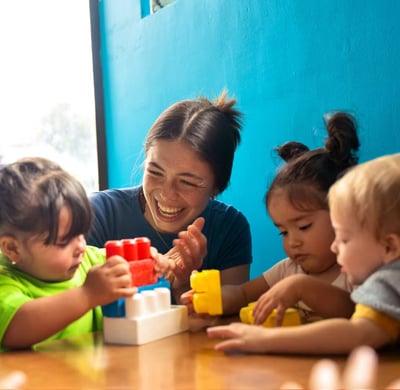
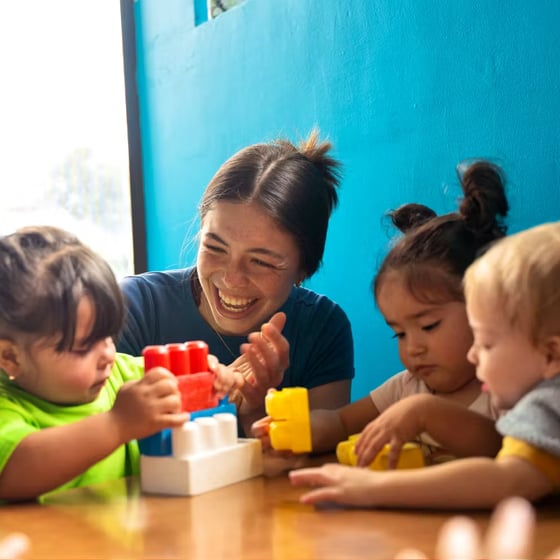
As a childcare volunteer in Costa Rica, you will provide additional support to childcare projects within the Coronado community. Not only this, Costa Rica volunteer programs provide a great foundation to improve your Spanish. Combine your Spanish learning and enthusiasm for childcare projects to make the most out of your volunteer with children in Costa Rica experience!
BACKGROUND TO THE CHILDCARE PROGRAM
Compared to other parts of Latin America, Costa Rica benefits from good standards of living and higher levels of education. Yet families from poorer backgrounds and more disadvantaged communities still face times of hardship. More specifically, they rely on the support of the wider community and social initiatives to help them get by.
Much of this assistance comes from local organisations or religious associations within the local area. For example, the local church will raise funds and host events to provide activities and support for underprivileged children and communities. Due to the interaction of the church, there is a big Christianity influence. Volunteers will encounter this on a consistent basis within the local community.
In addition to this, many parents who can find work will be working long hours. They will start working early in the morning and work well into the evening. The state and community support this by providing affordable, subsidised and well-resourced day-care centres. Coronado has a series of nurseries for young children to attend. At these nurseries, children are provided meals, education and a place to rest.
The projects in Costa Rica are well resourced and maintained. This is a positive example of money going into the right places for infrastructure and community development. Whilst it may not be so visually evident, many of the children at these projects come from poorer more disadvantaged backgrounds. When these families cannot afford new uniforms for their children the wider community will step in and provide.
Therefore, the volunteer need at these projects is different and not as apparent to other projects. Facilities are good and resources are plentiful. In contrast to this, many of the children come from disadvantaged backgrounds. They face much more challenging living standards outside of the project.
When you are abroad volunteering, your primary role is brighten up the days of these children. The project environment provides a great foundation for volunteers to facilitate this. As you volunteer with children in Costa Rica, your support from the local staff is much appreciated. This is because the ratio of caregivers to children can stretch up to 1:25 at times. The children are very cute and full of energy so get ready for craft time, meals and lots of singing!
To ensure our volunteers are equipped the childcare program will include 1 week of Spanish language classes to start your project! Thus when you travel to Costa Rica, these lessons that take place during your first week will set you up well for your volunteering experience.
Volunteer opportunities in Costa Rica will provide you with a platform to make a positive impact. When working at our childcare volunteer abroad projects in Costa Rica, it is important to maintain energy, enthusiasm and creativity. For the reason that many of these children will be seeking the care and attention that you as a childcare volunteer in Costa Rica can bring. To volunteer with children in Costa Rica, you will need to donate your time and skills effectively. This is to ensure you can maximise your impact on the local people.
CHILDCARE VOLUNTEER PLACEMENT EXAMPLE
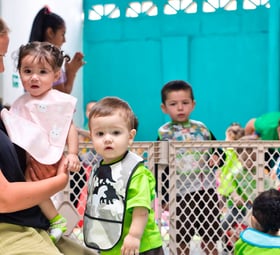
Tu Mundo de Colores - Located near downtown Coronado, the project is home to around 50 children each day. As you complete volunteer work in Costa Rica at this project, you will play a key role in supporting the more limited local support team.
The ages of the children range from as young as 2 months up to around 12 years old. The project is open from 5:30am-10pm although the volunteer schedule usually runs from around 8:30am-12:30pm. Volunteers are welcome to stay as long as they wish at the project. Thus, if you wish to continue volunteering in the afternoon, this is more than possible.
The morning schedule sees more children in attendance and more activities and class-based learning. In the afternoons when there are lower numbers of children. Thus the daycare centre tends to adopt a more relaxed approach with more play and recreation time.
The project itself is maintained thanks to the work of the people who take care of the children every day, as well as the donations they receive from people in the community. It is important to know that a big part of the population comes from homes with social risk. Volunteers are encouraged to be as creative and proactive as possible to engage with all the children and plan activities. The children are generally from the poorer areas of the local community. Your physical support doing volunteer work at the project can certainly go a long way.
Centro Infantil Pequeños Angelitos – Located just outside central Coronado, Centro Infantil Pequeños Angelitos provides childcare and early education for children aged 3 to 12. The centre supports families from a range of social and economic backgrounds, with government assistance helping to make childcare accessible to the local community. Children take part in a structured daily routine that combines educational activities, creative play, and outdoor recreation, providing a safe, nurturing environment where they can learn, build confidence, and develop important social skills. The project is easily reached by public bus, taxi, or Uber from the volunteer accommodation.
You will play an active role in supporting the children throughout their day. This may include assisting with educational activities, helping to organise arts and crafts, reading stories, supervising games, and encouraging learning through creative play. You will also help create a warm, welcoming environment by supporting meal times, keeping activity areas organised, and providing positive encouragement to the children. Working alongside the dedicated local staff, you will help ensure every child feels supported, engaged, and cared for while gaining valuable insight into community-based childcare in Costa Rica.
Intermediate Spanish skills are recommended for our childcare projects, as most of the staff speak only Spanish and use very limited English. Your ability to communicate in Spanish will help you better support the children and the team.
OTHER THINGS TO CONSIDER WORKING WITH CHILDREN IN COSTA RICA
Return Airport Transfer - Your return airport transfer is not included in your Program Fee. Our local team can help arrange onward transfers to the airport or an alternative destination from the accommodation. Making specific arrangements once in Costa Rica provides more flexibility as plans can often change and participants may be on similar flight plans. Alternatively, a more common and cheaper method is to use a ridesharing app. Participants can often be travelling across their final few days and therefore are not necessarily heading back to the airport directly from our accommodation. The costs depend on your method of transport and your final destination. This can often be split across multiple participants if you are travelling with someone else on the program.
Spanish Requirements - As for all our volunteer in Costa Rica programs, we recommend that you speak a reasonable level of Spanish prior to your trip. There are no specific language requirements in order to join the program and you can join as an absolute beginner. However, we find that the ability to speak a good level of the Spanish language and a passion to learn more will greatly enhance your overall experience. This is because English is generally not widely spoken and therefore our programs should be viewed as a broader language immersion experience. If you do not speak a reasonable level of Spanish then you will find it difficult to communicate. As a result, this could lead to a more frustrating experience.
All volunteers in Costa Rica will participate in the learn Spanish in Costa Rica program for the first week of their experience. This provides everyone with 20 lessons per-week of group Spanish lessons and some optional afternoon cultural and social activities. In cases where a participant is the only one at their level, a participant may partake in 15 private lessons per-week instead. Each lesson lasts 50 minutes.
Prior to your arrival, you will receive an email request to take a Spanish Proficiency level form. The form is quick and used by the local team to prepare your classes upon arrival. The aim of this week is to try and improve your level of Spanish before you start volunteering in your second week. Most participants in Costa Rica are purely joining the Language Immersion program rather than volunteering. Therefore, the Spanish language experience is a huge part of the overall culture of the setup in Costa Rica.
We also offer Online Spanish Lessons that you can take before your trip. The lessons provide you with the opportunity to receive one-on-one classes from a trained Spanish teacher. Classes are held via Zoom and can be worked around your schedule back in your home country.
Once you are in-country then you are also able to organise additional Spanish lessons directly with our local team. Volunteer feedback suggests that it can often be tiring to complete Spanish lessons at the same time as your volunteer programs in Costa Rica. Consequently, we generally recommend extending your Language Immersion Program.
Placement Settings - We do not provide volunteer opportunities in orphanages in any of our locations. Research and studies have shown that visiting and volunteering in orphanages has the potential to generate an industry that separates children from their families. In turn, putting children at increased risk of neglect and abuse. Therefore, we do not support these institutions with our volunteer network.
Instead, we focus on offering alternative childcare volunteer opportunities whereby children come to and from the placement setting each day. In other words, our local teams collaborate with childcare projects which do not offer any form of residential care. These are safe, responsible, and vetted projects, where participants continue to provide valued assistance supporting local staff.
Weekends - Your project work in Costa Rica runs from Monday-Friday and weekends are free. You are welcome to relax and hang out at the volunteer accommodation but most participants will use this time to travel and explore the country. As a result, you can check out our Costa Rica Weekend Travel Guide for top tips on how to spend your weekend.