Login

Select travel dates to see prices

Excellent 4.89rating (1848)

Costa Rica Wildlife Volunteers

location
2 - 4 weeks  ·  Age 18 - 50+
Verified
Volunteer project with the highest quality. This project sets unprecedented standards in quality - an unparalleled level of excellence.

Highlights

  • Contribute Towards The UN's Development Goal No.15 – Life On Land.
  • Help To Care For Endangered Species In Costa Rica.
  • Support The Rehabilitation & Wellbeing Of Displaced Animals.

Highlights

  • Contribute Towards The UN's Development Goal No.15 – Life On Land.
  • Help To Care For Endangered Species In Costa Rica.
  • Support The Rehabilitation & Wellbeing Of Displaced Animals.
  • Enjoy The Local Culture With Afternoon Visits To Volcanoes & Museums.
  • One Week Foundation Of Spanish Language Classes Included.

  • You don't have to pay anything yet

    Especially good for

    Age 18+
    Singles
    Couples
    Groups

    About the program

    Step into the world of wildlife conservation. Work alongside local staff to feed, clean, and enrich the lives of animals at a dedicated rescue centre.

    Costa Rica hosts an exceptional range of animal species, representing approximately 5% of the world’s biodiversity, despite occupying just 0.03% of the Earth’s surface. Yet, many of these animals are increasingly displaced due to deforestation driven by the expansion of agriculture and ...

    About the program

    Costa Rica hosts an exceptional range of animal species, representing approximately 5% of the world’s biodiversity, despite occupying just 0.03% of the Earth’s surface. Yet, many of these animals are increasingly displaced due to deforestation driven by the expansion of agriculture and infrastructure. In response, wildlife rescue centres across the country work to rehabilitate and protect affected species.

    As a Costa Rica wildlife volunteer, you’ll support the care of these animals at a local centre and collaborate with dedicated individuals focused on preserving the country’s natural heritage. You’ll also help promote awareness of sustainable living and environmental responsibility.

    Our volunteer work in Costa Rica offers the opportunity to work closely with a variety of animals, participate in conservation efforts, and deepen your understanding of Costa Rica’s unique ecosystems.


    WILDLIFE VOLUNTEER PROJECT EXAMPLE

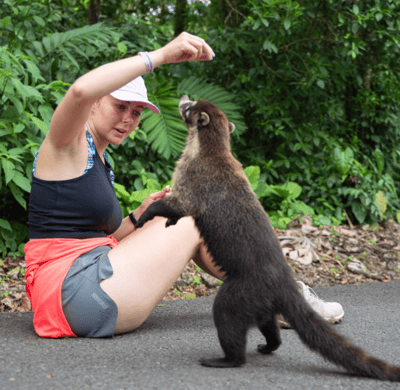
    The Toucan Rescue Ranch (TRR) - Working closely with government agencies such as the Ministry of Environment and Energy (MINAE), the Toucan Rescue Ranch (TRR) focuses on the care, rehabilitation, and release of confiscated, sick, and injured Costa Rican wildlife. While best known for its work with toucans, sloths, and owls, TRR also supports a wide range of other species, including kinkajous, porcupines, parrots, weasels, and more.

    Founded in 2004 with a mission to rescue and rehabilitate toucans, TRR quickly gained a reputation for excellence. As a result, MINAE began sending more bird species to the centre. In 2007, the arrival of Millie, a baby sloth, marked a significant shift. From that moment, TRR expanded into a full-time rescue facility for multiple species, while maintaining a strong focus on toucans, sloths, and owls.

    Today, TRR’s goals include establishing a captive breeding program for all six species of Costa Rican toucans and continuing to provide expert care to rescued animals. Their main mission is to rehabilitate and release wildlife back into their natural habitats. Beyond animal care, TRR also offers educational programs, research opportunities, and facilities nationwide. 

    The Costa Rica wildlife volunteering placements are available for both local and international participants, providing an opportunity for individuals to support vital conservation efforts and contribute to the protection of Costa Rica’s unique wildlife. As a wildlife volunteer in Costa Rica, you must have an up-to-date Tetanus vaccination and provide proof of this to the local team when you are in Costa Rica. Access to the on-site wild animal clinic and rehabilitation areas is restricted to the veterinary team and local staff.


    OTHER THINGS TO CONSIDER AS A WILDLIFE VOLUNTEER IN COSTA RICA

    Return Airport Transfer - Your return airport transfer is not included in your Program Fee. Our local team can help arrange onward transfers to the airport or an alternative destination from the accommodation. Making specific arrangements once in Costa Rica provides more flexibility as plans can often change and participants may be on similar flight plans. Alternatively, a more common and cheaper method is to use a ridesharing app. Participants can often be travelling across their final few days and therefore are not necessarily heading back to the airport directly from our accommodation. The costs depend on your method of transport and your final destination. This can often be split across multiple participants if you are travelling with someone else on the program.

    Spanish Requirements - As for all our volunteer in Costa Rica programs, we recommend that you speak a reasonable level of Spanish prior to your trip. There are no specific language requirements in order to join the program and you can join as an absolute beginner. However, we find that the ability to speak a good level of the Spanish language and a passion to learn more will greatly enhance your overall experience. This is because English is generally not widely spoken and therefore our programs should be viewed as a broader language immersion experience. If you do not speak a reasonable level of Spanish then you will find it difficult to communicate. As a result, this could lead to a more frustrating experience.

    All volunteers in Costa Rica will participate in the learn Spanish in Costa Rica program for the first week of their experience. This provides everyone with 20 lessons per-week of group Spanish lessons and some optional afternoon cultural and social activities. In cases where a participant is the only one at their level, a participant may partake in 15 private lessons per-week instead. Each lesson lasts 50 minutes.

    Prior to your arrival, you will receive an email request to take a Spanish Proficiency level form. The form is quick and used by the local team to prepare your classes upon arrival. The aim of this week is to try and improve your level of Spanish before you start volunteering in your second week. Most participants in Costa Rica are purely joining the Language Immersion program rather than volunteering. Therefore, the Spanish language experience is a huge part of the overall culture of the setup in Costa Rica.

    We also offer Online Spanish Lessons that you can take before your trip. The lessons provide you with the opportunity to receive one-on-one classes from a trained Spanish teacher. Classes are held via Zoom and can be worked around your schedule back in your home country.

    Once you are in-country then you are also able to organise additional Spanish lessons directly with our local team. Volunteer feedback suggests that it can often be tiring to complete Spanish lessons at the same time as your volunteer programs in Costa Rica. Consequently, we generally recommend extending your Language Immersion Program.

    Project Requirements - Wildlife volunteers in Costa Rica are required to have a current Tetanus vaccination and must show proof to the local team upon arrival. The on-site wild animal clinic and rehabilitation areas are only accessible to the veterinary team and authorised local personnel.

    Project Focus - This placement is built around hands on conservation work. Although it requires travelling further than the other projects, it provides a rewarding and meaningful experience. The days are longer, usually around eight hours, which is why the schedule operates across four days each week so that volunteers have a long weekend to rest or explore. The role calls for commitment, steady concentration, and a clear interest in wildlife care. You will still have evenings free, but choosing this project means you may miss some of the afternoon activities available to volunteers on other Costa Rica programs. Anyone considering this placement should be prepared to put the animals first and approach each day with consistency and purpose.

    Weekends - Your project work in Costa Rica runs from Monday-Thursday and weekends are free. You are welcome to relax and hang out at the volunteer accommodation but most participants will use this time to travel and explore the country. As a result, you can check out our Costa Rica Weekend Travel Guide for top tips on how to spend your weekend.

    Typical day

    As a wildlife rescue volunteer in Costa Rica, you’ll support a variety of tasks at The Toucan Rescue Ranch, gaining hands-on experience in the day-to-day care and rehabilitation of rescued animals. Shifts usually begin around 7:30am and finish by 3:30pm, working alongside a passionate and ...

    Typical day

    As a wildlife rescue volunteer in Costa Rica, you’ll support a variety of tasks at The Toucan Rescue Ranch, gaining hands-on experience in the day-to-day care and rehabilitation of rescued animals. Shifts usually begin around 7:30am and finish by 3:30pm, working alongside a passionate and experienced team committed to wildlife protection.

    Travel to and from the project site is not covered by your Program Fee. The Toucan Rescue Ranch is located around thirty minutes from the Volunteer House by car. Most volunteers use Uber because it is the simplest and quickest option, and the fare can be shared when travelling with others. While this is the most convenient choice, it is noticeably more expensive than taking public transport. If you prefer to use the local buses, the trip usually requires two changes and takes just over an hour. Because the workday begins early, private transport is generally advised in the mornings, and the local team will organise this for your first day as part of your project introduction.

    Volunteers typically work four days a week, with shifts lasting approximately 8 hours. The working week normally runs from Monday to Thursday, though your weekday off may vary depending on the schedule and staff availability. You’ll have short breaks throughout the day during your Costa Rica wildlife volunteering, along with a one-hour lunch break. You are welcome to bring lunch with you, prepare food on-site or visit one of the nearby restaurants.

    Each day on the Costa Rica wildlife rescue volunteer program includes routine tasks essential for the animals’ care and welfare, along with additional projects that support the centre’s ongoing development. Some of the tasks you may assist with as an animal volunteer include:

    Feeding – Feeding varies by species and season. Mammals may be fed twice a week with meat, while monkeys and birds often get fresh fruit daily. You’ll help prepare species-specific meals and learn about their dietary needs.

    Enrichment – Many animals at the centre have been affected by habitat loss or the illegal wildlife trade. Enrichment activities help them recover emotionally and behaviourally. You may assist with tasks such as preparing foraging activities, playtime, or social interactions to support their recovery. With time and care, you may even build a bond with a curious parakeet or playful monkey.

    Enclosure Cleaning – Enclosures are designed to meet the specific needs of each animal. Some may be smaller initially to help stressed animals feel secure, with gradual expansion as they adjust. Tasks may include cleaning perches, maintaining plants, and refreshing branches. If you’re comfortable, you might clean areas where vibrant birds fly freely above you.

    Maintenance – Volunteers help with general upkeep around the centre. This could involve fixing enclosure gates, repairing fencing, clearing weeds, or other small construction tasks. You’ll work with staff to keep the space safe and enriching for the animals.

    By joining this Costa Rica wildlife volunteer project, you’ll contribute directly to conservation efforts. Your involvement supports not only the animals in care but also helps raise awareness and strengthen the connection between local communities and their natural environment.

    All training and equipment will be provided by the Toucan Rescue Ranch so there is no need to bring anything specific, just clothing to keep you cool in the tropical Costa Rican temperatures and a rain jacket!


    Free-time activities

    Volunteer in Costa Rica participants are based in Coronado. This is a very popular suburb of San Jose and home to nearly 60,000 residents! It’s a small tico town with a very typical way of life. The city is set at the foot of Braulio Carrillo National Park, a virtually untouched location home to ...

    Free-time activities

    Volunteer in Costa Rica participants are based in Coronado. This is a very popular suburb of San Jose and home to nearly 60,000 residents! It’s a small tico town with a very typical way of life. The city is set at the foot of Braulio Carrillo National Park, a virtually untouched location home to over 150 different species of animals. Coronado offers visitors an opportune ability to encounter both the city life and natural wonders of Costa Rica!

    Coronado is famous for its neo-Gothic architecture. Right in the centre of the city lies the most beautiful cathedrals in Costa Rica, San Isidro de Coronado. Aside from the beauty of this location you can find yourself at a prime spot to take a boat tour through the rain forest, hike to the Locos por el Bosque cloudforest reserve, eat at Kaffa Café and visit the La Paz Waterfalls Gardens.

    Our participants are situated in a great location to explore the local sites, from both the hip and historic cultural attractions and natural wonders, but also travel further afield with ease.

    Coronado is located 10km from San Jose, the capital of Costa Rica. Take off after your morning Spanish lessons to visit for a cappuccino or fresh juice at the local cafe, hope on a bus to the San Jose for a movie at the cinema or even join a tour to Irazú Volcano. Be sure to plan out your time volunteering so you don’t miss some of the best attractions in San Jose including the National Museum, Plaza de la Cultura, the up and coming Escalante neighbourhood with cool bars and restaurants and the Spirogyra Butterfly Garden.

    This suburb offers an extremely diverse atmosphere, perfect for any traveller!


    Requirements

    Requirements

    Minimum Age: 18 years

    In order to join the program you need to be at least 18 years old on the program start date. There might be exemptions if you can provide the permission of your legal guardian(s) or if your are accompanied by your parents.

    Language Skills

    You need to speak English (basic level)

    Criminal Background Check

    required

    Nationality Restrictions

    No restrictions. Helping hands from all over the world are welcome.

    Time Commitment

    Your helping hand will be required on Monday, Tuesday, Wednesday and Thursday

    What's Included

    What's Included

    On-site Services

    • One Week of Spanish Lessons
    • Accommodation 
    • Airport Pick Up
    • In-Country Orientation
    • 24 Hour Support

    Airport Pickup at Juan Santamaria International Airport

    You should arrive into Juan Santamaria International Airport in San Jose (airport code SJO) on the Sunday. The airport pickup is available 24 hours. 

    You will be met at the airport by a representative of the local team. The team will meet you at the exit area of the arrivals hall after customs and then drive you to the accommodation in Coronado. This journey takes around 45 minutes, depending on traffic. 

    Accommodation

    Volunteer House

    During your time on the Costa Rica volunteer programs you will live in our Volunteer House. This is located in Coronado, a suburb of San Jose. You will find restaurants, convenience stores, cafés, pubs and ATMs all within walking distance. You’ll be living with other volunteers from around the world, so you’ll make plenty of friends along the way.

    The accommodation is comfortable and comes with free Wi-Fi. Each room has single beds with up to 3 people per room in same-sex rooms. Volunteers are provided with cupboard space and bed linens. Bathrooms are shared but have a shower and western-style toilet.

    The house has a communal area for international volunteers to hang out after completing volunteer work in Costa Rica. We encourage you to bring some small padlocks to store any valuables in your own bags. However, there is a safe in each room for shared storage should you wish to use this. In addition, there will be fridge space available for volunteers to store any chilled items. The Volunteer House has a laundry room on-site. Consequently, you can do all your own washing equipped with washers and dryers!

    Volunteers are a short walk from the centre of Coronado. As a result, many restaurants, supermarkets and volunteer projects are nearby! The residence accommodation is in a compound that comes with 24 hour security. Moreover, there is a digital keypad to open and close the front gates. This is to ensure that volunteers are safe. There are fully equipped kitchens to prepare all of your food within the house. To sum up, the volunteer accommodation setup offers volunteers a unique experience. That is, you get the opportunity to live with other volunteers as well as an independent living environment.

    Internet Access

    Good access at the project site
    You don't have to pay anything yet

    What's NOT included?

    What's NOT included?

    Food & Beverages

    Food, snacks or beverages are at extra costs.

    Flight Tickets

    The nearest airport is Juan Santamaria International Airport (SJO) in San Jose. We assist you to find cheap flights to Costa Rica. FIND CHEAP FLIGHTS

    Travel Insurance

    Going abroad is an adventure and it is always best to be prepared. Sudden illness or injury, cancellation or theft - a travel insurance for Costa Rica provides security and is a plus to have. GET A QUOTE

    Vaccines

    If you are intending to volunteer in Costa Rica you should seek medical advice before starting your social journey. Check your required vaccinations for Costa Rica. VACCINE CHECKER

    Details on arrival

    This program starts on the 1st & 3rd Sunday of every month
    Availability
    Jan Feb Mar Apr May Jun Jul Aug Sep Oct Nov Dec

    Program Fees

    $417 per week 2 - 4 weeks Age 18 - 50+

    Payment methods

    Visa Master Card Maestro American Express PayPal

    NO CREDIT CARD FEES


    Duration

    2 - 4 weeks

    Deposit

    Reserve your spot with just a few clicks and a small, secure deposit. You can pay by credit card, PayPal, or other convenient methods.


    Final Payment

    You’ll agree on the final payment method with your local organization during the application process. This final payment is only due closer to the start of your trip.

    You don't have to pay anything yet
    4.9
    Travelers’ Choice
    One of the most loved volunteer experiences, according to travelers

    Volunteer photos

    Location


    Meet your project coordinator

    Josh
    1848
    reviews
    4.89
    Excellent
    2011
    Founded

    Verified

      Very high response rate
    Spoken languages: English
    Travel safely by using Volunteer World for your communication and bookings. This way, you can benefit from the Flex Option, Refund Guarantee, and Resolution Support.

    You might also be interested in

    Contact Josh
      Very high response rate
    English

    Most volunteers ask about


    Do you have any more questions? Send a message to Josh
    Please don't share personal contact details for your privacy

    Travel dates

    1. - 1. Jan 1

    Book with Flex Option!

    Choose new departure dates or change to a different volunteer program at no extra costs within 12 months.

    Complete Support for Every Volunteer

    This helps us run our platform and offer essential services like Comprehensive Support, Refund Guarantee, Flex Option without rebooking costs, and Price-Guarantee. This includes VAT.

    Price details