About The Placement
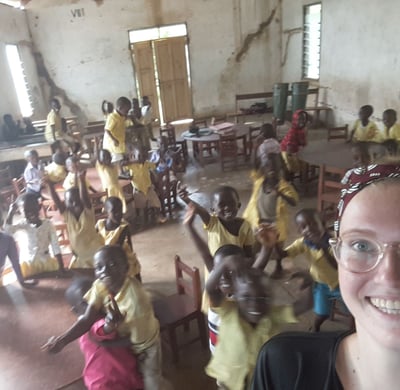
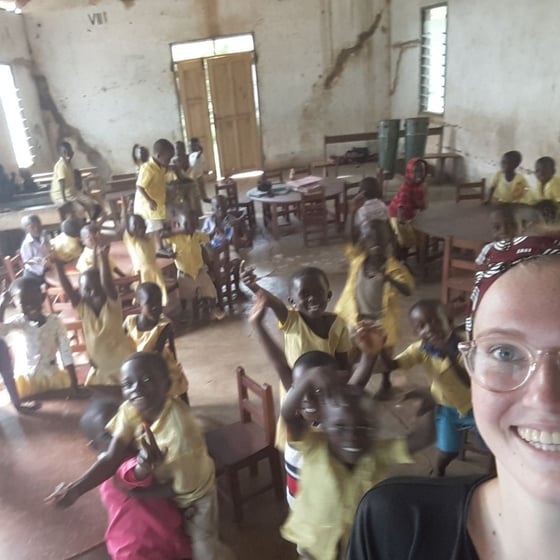
We offer placements in Nursery, Kindergarten and Crèche settings throughout the year, depending on availability. These early-years classrooms provide a uniquely hands-on experience. The children are very young and require not only help with their first steps into education but also with daily care and comfort.
One moment you might be teaching colours, counting numbers or singing songs, and the next you’ll be helping to feed the youngest in class or settle them for a nap. This variety makes the placement both lively and rewarding for volunteers who enjoy nurturing and guiding children at the start of their learning journey.
Why This Placement Matters
Early-years classrooms in Ghana are often the most crowded, with one teacher or caregiver responsible for dozens of children. Despite limited resources, staff work tirelessly to give children the best possible start in life. Supplies, learning materials, and even basic classroom furniture can be scarce, yet these early experiences are crucial in preparing children for their future schooling.
Your presence helps to relieve some of this pressure. By volunteering, you provide much-needed extra care and attention that the staff cannot always offer in such large groups. Nursery and Kindergarten classes—usually part of a primary school—focus on foundational learning such as letters, numbers, songs, stories and social skills. For many children, this may be their only exposure to structured early education.
Crèches perform a similar role independently, caring for even younger children so that parents can return to work and support their families. By assisting in these settings, you not only help children develop essential skills but also strengthen the wider community by enabling parents to earn a living.
What’s Included
Shared volunteer accommodation
in a modern house in semi-rural Kwahu with views of surrounding
forests. Utilities such as electricity, running water, and kitchen
facilities are provided.
-
Airport pickup on arrival.
-
Pre-departure support and access to our volunteer portal.
-
24/7 in-country support, with a local team member living on-site or nearby depending on volunteer numbers.
Your contribution directly sustains this support structure,
enabling us to employ local staff and ensure volunteers have safe,
comfortable living conditions.
Getting to Your Placement
We work with a network of
local and nearby schools. Volunteers generally use shared taxis to
travel to their placement, which are readily available and affordable.
Our team will guide you on routes, group transport, and local tips.
After school, volunteers can easily reach town to shop, meet friends, or
explore the area.
Your Role
Working with very young children calls for enthusiasm, patience and flexibility. Alongside introducing basic numbers, letters, songs and games, you’ll also help with everyday care: feeding, supervising playtime, settling for naps, and supporting mixed-age groups throughout the day. Expect plenty of hugs, giggles—and the occasional tear!
Depending on your confidence and interests, you might:
-
Lead simple lessons or circle-time activities.
-
Assist staff in managing large groups and keeping children engaged.
-
Prepare fun, low-cost activities using the resources in the volunteer house.
-
Support staff with basic record-keeping or classroom organisation.
Your energy, creativity and consistency give children a stable, positive environment where they can feel safe and learn through play.
Working Relationships
Where numbers permit, we aim to place volunteers in pairs or small groups at each school or project. You will work closely with a teacher or nurse and report to the Headteacher for any issues. A member of our team also spends part of their day at the project to assist and offer guidance whenever needed.
Most volunteers develop strong bonds with the teachers and caregivers they support, often being treated as another member of staff from the very start. It’s not uncommon to be invited to a staff member’s home for a meal or to join local events as a gesture of thanks.
Volunteer Expectations
A teaching qualification or childcare experience is not compulsory. During your orientation we’ll discuss your comfort level and experience to match you with the right age group.
The qualities we value most are:
-
Enthusiasm & Warmth – Being genuinely interested in the children’s wellbeing and progress.
-
Flexibility & Adaptability – Daily routines may change quickly with young children.
-
Empathy & Cultural Sensitivity – Respect for local customs and teaching styles helps build trust.
-
Reliability & Commitment – Consistent attendance gives children a sense of security and routine.
We ask volunteers to attend their placements Monday to Friday (with some flexibility for travel) to ensure both you and the children benefit fully from your time here.
Our Commitment to You
We are available any time, day or
night, to support you—whether you’d like help organising an after-school
club, adjusting your placement, or planning weekend travel. Our local
team at the volunteer house is also happy to share insights into the
area and Ghanaian life.
From the moment you express interest in
volunteering until the day you return home, our team is here to walk
alongside you. We know that travelling to a new country to volunteer can
be exciting but also a little daunting, and we see it as our
responsibility to ensure you feel supported, informed, and welcomed at
every stage.
-
Before You Arrive – You’ll receive clear
pre-departure information, access to our volunteer portal, and direct
communication with our team. We’ll help you prepare for your placement,
advise on what to pack, answer cultural questions, and assist with
travel planning.
-
Arrival & Orientation – A member of our team
will meet you at the airport and accompany you to the volunteer house.
We provide an in-country orientation to introduce you to Ghanaian
culture, the local area, and your placement school. This includes
practical information, safety guidance, and an overview of your role so
you feel ready and confident from day one.
-
During Your Placement – You’ll never be left on your
own to figure things out. Our local support team lives on-site or
nearby and is available 24/7 for questions, emergencies, or simply to
chat. A staff member visits schools regularly to check on your progress,
help you resolve challenges, and ensure you have everything you need to
succeed. If you’d like to organise an after-school club, change your
placement, or explore new teaching ideas, we’ll guide you step by step.
-
Beyond the Classroom – We’re also here to help you
get the most out of your time in Ghana outside school hours. Our team
can advise on weekend trips, local events, and cultural experiences. We
want you to feel at home and to see the richness of Ghanaian life, not
just the inside of a classroom.
Continuous Support & Feedback – We keep
open channels of communication so you can give feedback on your
experience and we can continually improve. Your input helps shape the
way we run our programmes and ensures that future volunteers and partner
schools benefit from your insights.
What to Bring
Local supplies are limited, so we recommend bringing items that can enrich learning and play:
-
Teaching Aids – Alphabet and number flashcards, storybooks, simple puzzles.
-
Arts & Crafts Supplies – Crayons, markers, paints, glue sticks, scissors, craft paper, and stickers for creative sessions.
-
Activity Toys – Lightweight games, bubbles, a school parachute, or small toys to entertain groups—these are guaranteed to put smiles on faces.
-
Printable Resources – Download simple songs, worksheets or templates before you arrive, as internet access can be intermittent.
Basic stationery is available locally, but specialty materials can be hard to find or costly. Bringing a small selection of your own will make your activities more engaging and memorable.
During School Holidays
If your placement coincides with school holidays, we organise holiday schools at one of our partner institutions. Volunteers work together to run informal sessions such as arts, reading, English, sports and games. This provides continuity for students and valuable childcare support for parents working in farming or trading.
School holidays typically occur around Easter, August, and Christmas. Exact dates vary, and our team will advise you as they are announced. Leading up to vacation periods, you may also help with exams, invigilation, or support on our other community projects.