Embark on an enriching journey with us as we spearhead
systematic research on sharks, skates, and rays in the southern Adriatic Sea.
Our interdisciplinary approach delves into various facets, including population
dynamics, trauma and injuries from fisheries, post-capture survival, rehabilitation and clinical examinations, diseases, microplastics, reproduction and embryology. By delivering critical data, we contribute to effective long-term
conservation strategies, sustainable fisheries management, and pollution
mitigation. Our work is acclaimed and endorsed by esteemed organizations such
as UNEP MAP Barcelona Convention, National Geographic, Discovery Channel,
Explorers Club, EU and five countries in the region. During your stay, you will have
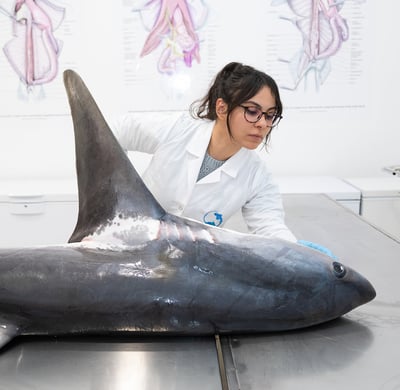
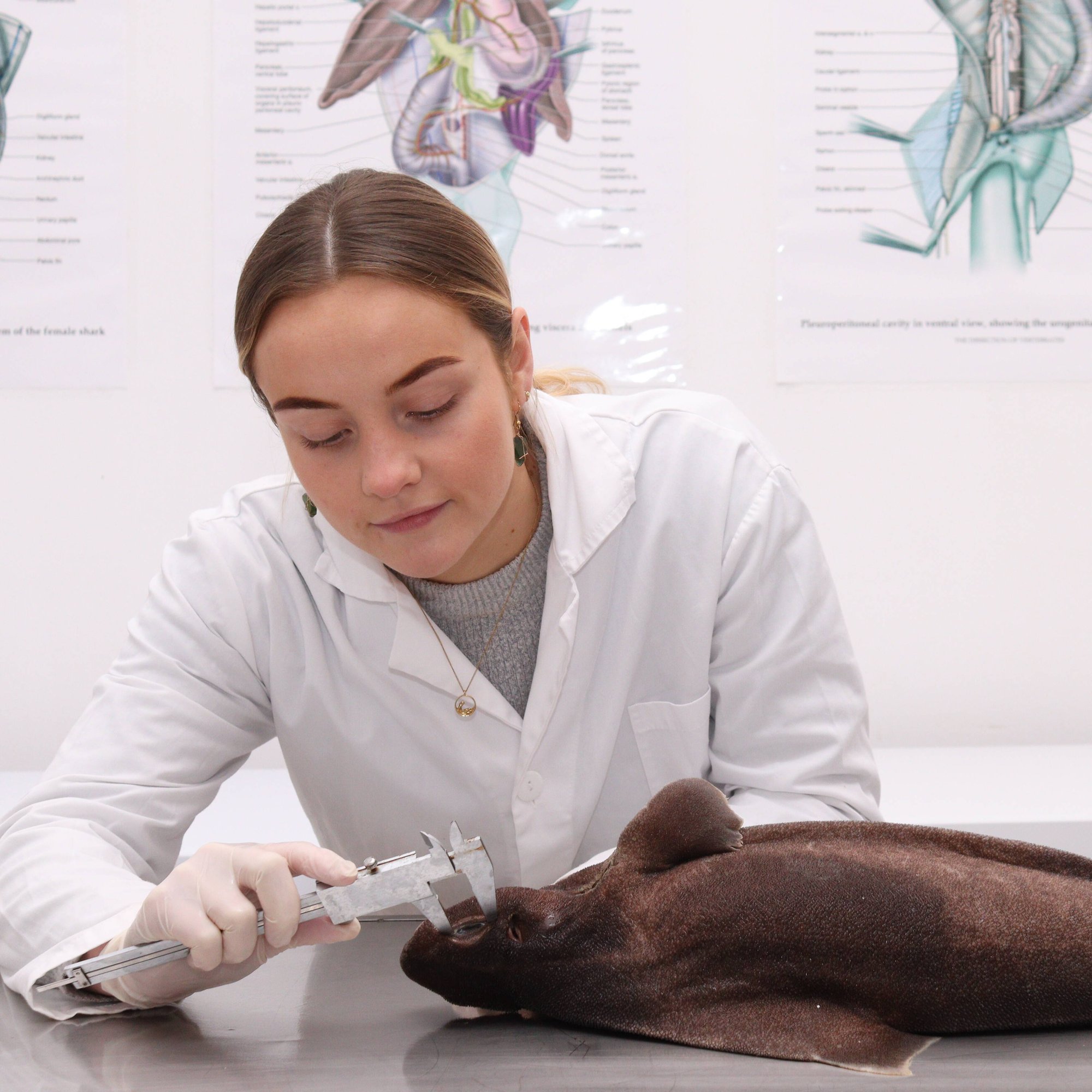
extensive hands-on experience with numerous species both in the field and at
the lab. As an intern, you will have one-of-a-kind advanced training, daily mentorship, and engage in a diverse array of scientific research activities designed to enrich
your expertise and professional skills. From in-depth monitoring to intricate
studies in embryology, comparative anatomy, pathology, histopathology, and
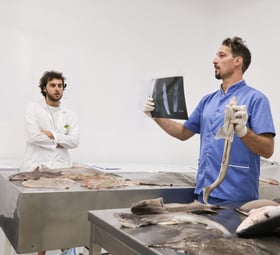
radiology (CT/MRI) - you will actively participate in hands-on experiences both
in the field and in the laboratory. Moreover, you will receive comprehensive
training on publishing your research, delivering captivating speeches,
delivering TED speeches and project management.
MEET YOUR SUPERVISOR
Under the guidance of Andrej A. Gajić, an
internationally awarded scientist, published author, advanced diver, awarded underwater photographer, and documentary
filmmaker, you will receive personalized mentorship and supervision. Andrej is
a Ph.D. researcher in veterinary medicine with an M.Sc. in marine biology and
conservation. Despite growing up in a war-torn country, Andrej always dreamed
of working with sharks. Today, he is an experienced principal investigator and
an awarded scientist with over 80 publications. He is Editorial Board member of
Aquatic Conservation, Q1 journal published by Wiley. Andrej has successfully
overseen 21 regional research projects and lectured at numerous conferences
across the United States, Europe, Asia and Africa. As head scientist, he has had
assignments for National Geographic, Discovery Channel and Explorers Club. His research has
been featured in over 300 media outlets, including Nat Geo, FOX, Discovery,
Warner Bros., CNN, BBC, Forbes, Yahoo and many others. For his contributions to
scientific research and conservation, he was appointed as an honorary
ambassador of the UNEP MAP Barcelona Convention (2022); and awarded with the
Special Governmental Recognition for Extraordinary Achievements (2021), EC
Leadership by National Geographic (2020), Man of the Year (2019) and
more. Additionally, he is an expert reviewer of grants for National
Geographic, Conservation Nation, and other esteemed foundations.
TRAINING PROVIDED
We are committed to providing unique and comprehensive training, scientific support, and professional mentorship throughout your internship journey and, of course, far beyond. The training included in the program is specially designed for UNEP MAP Barcelona Convention and Italian Ministry of Environment by Sharklab ADRIA. In addition to hands-on field and laboratory experiences, the internship includes specialized training sessions covering a wide range of topics, including Biosystematics and taxonomy; Rehabilitation and Clinical Examinations; Soft tissue surgeries; Comparative and functional anatomy; Manuscript and technical report writing, Project writing and management; and delivering captivating speeches and far more. Discuss key topic with your supervisors on a daily basis and master both professional and soft skills.
WHAT TO EXPECT?
Scientific Monitoring: Engage
in comprehensive monitoring of both commercial and artisanal fisheries,
focusing on assessing by-catch composition and identifying various species.
Participate in studies to evaluate trauma and injuries from different fishing tools, post-release survival rates, contributing
crucial data to inform conservation strategies and sustainable fishing
practices. Participate in sampling activities and gain insights into the
dynamics of deep-sea ecosystems, including species diversity, distribution, and
abundance.
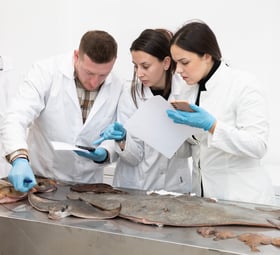
Comparative Anatomy:
Significantly deepen your understanding of vertebrate anatomy and gain hands-on
experience with laboratory tools.
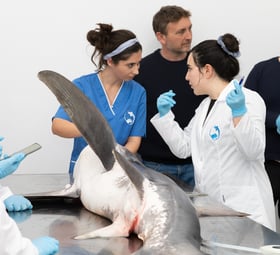
Pathological Examinations: master the art of conducting autopsies and recognizing
tissue changes indicative of various lesions and disease. Learn to collect samples and prepare them
for microscopic examination.
Basic surgical Techniques: Acquire skills in basic soft tissue surgeries in
marine animals, including implanting tags and removing foreign bodies. Learn
wound treatment and suture procedures, essential skills for conservation
interventions and wildlife health management.
Histopathology:
Focus on identifying lesions in critical organs such as the brain and liver,
honing your skills in disease characterization and diagnosis. Learn diagnostics
using HE and special stains.
Magnetic Resonance Imaging:
learn how to use MRI to assess trauma and injuries resulting from fishing
activities such as trawling. Develop mitigation measures to ensure higher
post-capture survival rates in threatened and vulnerable species.
WHAT IS OUR PROGRAM EXACTLY ABOUT AND WHY IS IT IMPORTANT
We are always at the front lines of conservation! Overall, the program offers a unique opportunity to make a tangible impact on marine conservation while gaining extremely valuable skills and experience in a supportive and inspiring environment. By conducting pioneering research, we are delivering first data on the most elusive and threatened species and directly contribute to their conservation. Further, the program emphasizes engagement with local communities, particularly fishermen, fostering collaboration and promoting sustainable fishing practices. This community involvement is essential for building support and implementing conservation measures that are locally relevant and effective. Interns gain extensive hands-on experience in field research, laboratory techniques, and data analysis under the mentorship of experienced scientists. Furthermore, the interns will receive high quality training as a part of the program.
Our program at Sharklab ADRIA focuses on unique comprehensive research, conservation, and community engagement initiatives aimed at protecting elasmobranch species and their habitats in the eastern Adriatic Sea. Through rigorous scientific research, innovative conservation strategies, and active involvement with local communities and stakeholders, we aim to: 1) conduct pioneering research to understand the biology, behavior, and threats facing elasmobranchs; 2) Develop and implement conservation strategies based on scientific findings to ensure the long-term survival of these species; 3) engage with local communities, particularly fishermen, to promote sustainable fishing practices, foster mutual understanding, and build support for marine conservation efforts; 4) build local capacities and educate the public, policymakers, and stakeholders about the importance of marine biodiversity, the threats it faces, and the role of conservation in safeguarding ecosystems; and 5) influence policy at local, national, and international levels by advocating for evidence-based conservation policies and regulations that protect marine habitats and species.
Through these integrated efforts, Sharklab ADRIA strives to lead in elasmobranch conservation, making tangible impacts in marine biodiversity conservation and sustainable resource management. Our interns and volunteers and crucial part of all mentioned activities!
WHAT ARE THE ROLES OF INTERNS
The role of interns at Sharklab ADRIA is pivotal in supporting our mission of elasmobranch conservation and marine biodiversity research. Interns receive comprehensive training and play a crucial role in various aspects of our programs:
Training and Skill Development: Interns and volunteers gain hands-on experience and skills in marine biology, field research techniques, data analysis, and scientific communication through structured training sessions and mentorship from leading experts in the field.
Field and Lab Research Assistance: They assist in fieldwork activities such as data collection, specimen sampling, and habitat surveys. In the laboratory, they are conducing all the analysis and examinations under the guidance of experienced researchers. They gain extensive hand-on experience as they work and process every sample we have.
Effective Conservation: Participants further engage in the development of species-specific conservation measures based on the scientific evidence, conducted in collaboration with Barcelona Convention.
Contribution to Research and Publications: Interns may have the opportunity to contribute to research publications based on their work and findings during their tenure at Sharklab ADRIA, depending on their engagement. Only last year, we have published 4 papers with more than 6 interns in some of the leading journals!
Overall, interns are integral members of our team, receiving training and contributing to both our scientific endeavors and our broader mission of protecting marine biodiversity and promoting sustainable marine resource management in the Adriatic Sea region.
WHAT CAN THE INTERNS EXPECT FROM US?
Interns at Sharklab ADRIA can expect a totally rewarding and enriching experience that includes:
Training and Mentorship: Comprehensive training sessions and daily mentorship from leading experts in the field, helping volunteers develop their skills and understanding of marine conservation practices. The training also includes academic publishing and project management.
Contribution to Real Research and Hands-On Learning: Opportunities to gain practical experience in marine biology, field research techniques, and laboratory skills under the guidance of experienced awarded scientists. Such experience is based mostly on studying the post-capture survival, diseases, reproduction and population dynamics.
Contribution to Real Conservation: Involvement in meaningful conservation projects focused on elasmobranchs, and analysis that directly contribute to effective conservation efforts.
Community Engagement: Engagement with local communities and stakeholders to study local ecological knowledge, promote conservation awareness and participate in educational outreach.
Networking Opportunities: Connections with other volunteers, researchers, and professionals in marine biology and conservation, as well as potential collaboration with our international partners and organizations.
Thesis Support: Mentorship and potential co-funding opportunities for B.Sc., M.Sc., and Ph.D. theses. Volunteers are encouraged to discuss these possibilities with our staff upon arrival to explore how their research interests can align with ongoing projects at Sharklab ADRIA.
Professional Development: Opportunities to significantly enhance their resume or CV with hands-on research experience, potentially contributing to scientific publications and gaining insights into cutting-edge career paths in marine biology and conservation.
Ultimately, you can expect impact and recognition—the satisfaction of contributing through extra effort and unforeseen challenges to meaningful conservation initiatives that have a tangible impact on marine ecosystems, supported by recognition and appreciation from Sharklab ADRIA and the wider conservation community.
WHAT DO WE EXPECT FROM OUR INTERNS
When joining Sharklab ADRIA, you are stepping onto the front line of conservation and advanced research programs. While this experience is immensely valuable and thrilling, it can also be challenging, unpredictable, and physically demanding. Therefore, we expect interns to have:
Commitment and Enthusiasm: Demonstrate significant dedication and enthusiasm for sharks, skates, rays, and marine conservation, aligning with our mission.
Adaptability and Initiative: Be adaptable to various and changing research environments, showing initiative in completing tasks and assisting with different aspects of projects.
Respect for Procedures: Follow research protocols and safety guidelines meticulously to ensure accurate data collection and maintain the integrity of our scientific research. Your role is crucial in our genuine research efforts.
Team Collaboration: Work effectively as part of a team, fostering open communication, sharing knowledge, and supporting others.
Professionalism: Conduct yourselves professionally, exhibiting integrity, reliability, and a positive attitude throughout your volunteer experience.
Continuous Learning: Be open to acquiring new skills, receiving mentorship, and actively participating in training sessions and educational opportunities provided by Sharklab ADRIA.
Flexibility: Understand and adapt to unforeseen circumstances that may arise, particularly when working in developing countries. Rest assured; our supervisors are dedicated to addressing your needs promptly.
WHICH SOCIAL ISSUES DO WE FACE?
Addressing these social issues requires collaborative efforts among scientists, policymakers, local communities, and international organizations to ensure sustainable management of marine resources and the protection of biodiversity. Sharklab ADRIA's approach, integrating research, community engagement, and policy advocacy, aims to tackle these challenges holistically. Several social issues are prominent in Albania:
- Overfishing, Illegal fishing and Unsustainable Practices: one of the major threats to marine biodiversity is overfishing, driven by unsustainable practices.
- Complete Lack of Awareness and Education: majority of stakeholders lack awareness about the importance of marine biodiversity and the impact of human activities on marine ecosystems.
- Policy and Governance Challenges: poor management, inadequate measures and poor enforcement of regulations hinder conservation efforts.
- Habitat loss and Pollution: Habitat loss in occurs due extensive coastal development, dredging, former dynamite fishing and bottom trawling. Polluton present one of the most significant issues after overfishing.
- Lack of experts and monitoring: The lack of experts and monitoring capabilities presents significant challenges for effective marine conservation, particularly in the context of elasmobranchs.
How do we try to solve these issues?
At Sharklab ADRIA, our commitment extends beyond scientific research to actively addressing key social challenges in marine conservation, including overfishing, community conflicts, education gaps, climate impacts, and governance issues. By addressing these issues through comprehensive strategies, Sharklab ADRIA aims to promote sustainable management of marine resources, protect biodiversity, and foster resilience in marine ecosystems for the benefit of present and future generations. Here is what we do:
ISSUE: Lack of data, Overfishing and Unsustainable Practices
Research and Data-Driven Solutions: Conducting scientific research to assess the current state of elasmobranchs, their population dynamics, key habitats and the impacts of fishing practices on marine ecosystems, including elasmobranch populations. Advocating for the adoption of sustainable fishing practices, and effective protection measures.
Close Collaboration with Fishermen: Engaging with local fishing communities to foster dialogue, educate about sustainable practices, and develop mutually beneficial solutions that support both conservation goals and livelihoods.
Stakeholder Engagement: Actively involving local communities, including fishermen, in conservation planning and decision-making processes.
Community-Based Conservation: Implementing community-based conservation initiatives that provide economic alternatives to unsustainable practices and promote stewardship of marine resources.
ISSUE: Lack of Awareness and Education
Capacity Building and Wider Education: Conducting educational workshops, seminars, and outreach programs to raise awareness about marine biodiversity, conservation issues, and the importance of sustainable practices; particularly focusing on students.
Media and Communications: Utilizing media platforms, including documentaries, social media, and partnerships with media outlets, to reach broader audiences and convey conservation messages effectively.
ISSUE: Policy and Governance Challenges
Policy Engagement: Engaging in policy advocacy at local, national, and international levels to strengthen marine conservation policies, improve enforcement of regulations, and secure funding for conservation initiatives.
Capacity Building: Building institutional capacity and providing technical expertise to support effective governance of marine resources and enforcement of conservation laws.
ISSUE: Habitat loss and Pollution
Research and Restoration Initiatives: Conducting comprehensive research to identify critical habitats for elasmobranchs and implementing projects to rehabilitate and protect habitats essential for their survival.
Research and Monitoring Programs: Implementing monitoring programs to assess the extent and impact of pollution on elasmobranchs and their habitats, using data to inform mitigation strategies.
Collaboration with Local Communities: Engaging with local communities to raise awareness about the importance of marine habitats, fostering community stewardship, and integrating local ecological knowledge into conservation strategies.
Advocacy for Marine Protected Areas (MPAs): Advocating for the establishment and effective management of MPAs to safeguard key marine habitats from further degradation and ensure long-term conservation outcomes.
OTHER DETAILS
Interns will directly collaborate with the main Principal Investigator, A. Gajić, and his small local team. For additional details, please refer to "Meet Your Supervisor." The wet lab is situated in downtown Vlore's most scenic area, Lungomare, which is also the city's tourist center. This ensures your safety regardless of working hours, with convenient access to grocery stores, restaurants, and bars. Your accommodation will be located in close proximity to the lab. Field activities typically occur throughout Vlore County, focusing especially on Triport Harbor, Zvernec, and around Sazan Island.
There are no specific requirements in terms of equipment, but we encourage you to bring your own camera(s) and basis diving equipment (this is to be discussed prior to arrival).