Login

Select travel dates to see prices

Fantastic 4.52rating (15)

Mozambique Marine Research & Conservation

location
2 - 12 weeks  ·  Age 18 - 50+
Verified

Highlights

  • Volunteer and have a lasting positive impact on the conservation of the whale shark
  • Help carrying out the marine research as well as the monitoring of activities
  • Join other volunteers on the project to collect the data via scuba dives, ocean safaris, and beach walks off the coastline

Highlights

  • Volunteer and have a lasting positive impact on the conservation of the whale shark
  • Help carrying out the marine research as well as the monitoring of activities
  • Join other volunteers on the project to collect the data via scuba dives, ocean safaris, and beach walks off the coastline
  • Expect an excellent diving, snorkeling and beach experience whilst gaining first hand marine research skills and contributing to a worthwhile project
  • Explore Mozambique's idyllic tropical beaches on the Indian Ocean

  • You don't have to pay anything yet

    Especially good for

    Age 18+
    Singles
    Couples
    Families
    Groups
    50+

    About the program

    Work in the field to help conservation of marine life in Tofo Beach.

    YOUR ROLE

    As a volunteer on the Marine Research & Conservation Project, you will help carry out the marine research and monitoring activities for the project under the guidance of our co-ordinating project scientists. You will join other volunteers on the project to ...

    About the program

    YOUR ROLE

    As a volunteer on the Marine Research & Conservation Project, you will help carry out the marine research and monitoring activities for the project under the guidance of our co-ordinating project scientists. You will join other volunteers on the project to collect the data via scuba dives, ocean safaris, and beach walks off the coastline of Tofo in Mozambique. You can expect an excellent diving, snorkeling and beach experience whilst gaining first-hand marine research skills and contributing to a worthwhile project.

    As a volunteer, you will help on a multitude of research projects. These include monitoring of whale shark numbers, behaviour, and ecology and taking underwater identification photographs; monitoring the condition of coral reefs and indicator species of reef fish. You will also be trained to take ID photos of manta rays and other threatened marine species to aid in population assessment and monitoring. At certain times of the year, you may help survey humpback whale numbers as well as other indicators of the health of marine biodiversity. You may also assist with beach clean-ups and other general environmental activities and will help upload and analyse the field data.

    Some of the activities are conducted all year round, some only at certain times. Our coordinating project scientists will teach you how to assist with data collection throughout your project duration. In order to carry out many of these activities, you will need to be able or willing to learn to scuba dive. An dive course leading to an internationally recognized qualification is provided at the cost of the program to facilitate this (not included in the 2 week option - which is only available to qualified divers).

    You will also need to be a capable swimmer (able to swim 100m unassisted) and snorkeler. Being able to hold your breath to dive down would be an advantage but is not required.

    HIGHLIGHTS

    The highlights of this incredible experience include:

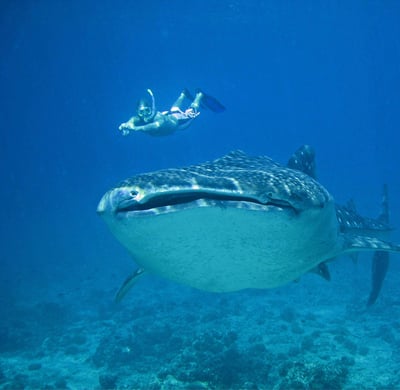
    • Snorkelling with the world’s largest fish – whale sharks (sightings not guaranteed)
    • Learning about the diverse species and megafauna, and contributing to their conservation
    • Learning to dive and experiencing the magic of the underwater world
    • Observing the migration of magnificent humpback whales (seasonal:  June to October)
    • Gaining hands-on experience in marine research techniques and analysis

    Some of the studies and activities you will get involved in may include:

    Reef Health (all year): This involves carrying out underwater data collection on indicator species of coral fish and the condition and cover of coral and echinoderms on the reefs. You will be required to learn to identify a number of different reef fish in order that you can record those which are seen on dives.

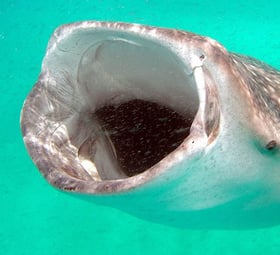
    Whale Shark (all year): We are lucky to see whale sharks (Rhincodon typus) year-round, though there has been a noticeable decrease in encounters since our monitoring began. Whale shark sightings can never be guaranteed, and in recent years they have been less frequent between September and December. The reasons for these shifts are not yet understood, which makes our continued monitoring efforts particularly important. We continue our regular surveys, and every sighting provides valuable data. Whale sharks are seen mostly swimming near the surface during our Ocean Safari snorkelling trips. Whilst on the boat, we record a range of environmental, temporal, anatomical, and behavioural information to help investigate population trends and potential interactions with local fishing activity. We also take photo-identification images to add to the global whale shark database – Wildbook for Whale Sharks – and you will learn how to individually ID whale sharks, view previous sightings, and track the movements of identified individuals. You will also receive presentations on the latest whale shark research both globally and within Mozambique, contributing to our continued efforts to better understand the largest fish in the ocean.

    Manta Ray (all year): Much like the whale shark, our other mega-planktivore, the manta rays, are also available year-round in Tofo. We have 2 species: the reef (Mobula alfredi) and giant/oceanic (Mobula birostris) manta rays. Both species can be seen feeding on plankton whilst snorkelling on our Ocean Safari tours, or being cleaned by reefer fish on the diving reefs on our 25-30m dive sites. We also record a range of data concerning environmental, temporal, anatomical, and behavioural data akin to the whale sharks. We have a database of manta-ray photo-identification images, giving us the opportunity to investigate their population demographics, migration/residency and individual life stories.

    Leopard Shark (all year):

    Our leopard shark database comprises extensive photo-identification material alongside behavioural observations, diver–shark interactions, health assessments and a wide range of other non-invasive field notes, all of which are well-suited for further analysis. The Marine Research Centre’s leopard shark catalogue has already supported several mini-projects by marine fieldwork students, contributed to a Master’s thesis, and informed peer-reviewed publications. Data collection is ongoing, and leopard shark sightings remain highly likely during the austral summer months.

    Humpback Whale (June-October): We monitor the numbers of Humpback Whales on their seasonal migration up and down the coast. This involves sand dune based observations using binoculars and boat-based observations recording the numbers of Whales, the makeup of the pods and the behaviours witnessed.

    Remote Camera Trap (all year): Our long-life remote camera trap is periodically left in place for up to five days at a time, making recordings of the megafauna moving through the cleaning station areas while we are not present. As SCUBA divers, we make noisy bubbles and can influence the behaviour of animals. Our remote cameras are used to assess the abundance, frequency, and biodiversity of megafauna life, as well as the dynamics of the cleaning station fish themselves during daylight hours throughout the year. During your stay you may observe our research staff deploying and retrieving the remote camera and may be asked to help with video analysis.

    Estuary Environment and Seahorses (all year): Estuary areas are also studied and monitored. We make excursions to the estuary at least once per month and here we are monitoring seahorses. You will be taught how to select a sample area and what type of data to record, then taught how this data is recorded and used in studies and monitoring. We take photographs and measurements of any seahorses we find.

    Micro-plastics and beach clean ups (all year): We regularly conduct microplastic surveys of random samples of the beach area and results are submitted to the University of Portsmouth's Big Microplastic Survey, a citizen science research project that is examining the scale and distribution of microplastics and mesoplastics on coastlines, lake shores and riverbanks around the world. As part of general conservation efforts, we organise regular beach clean ups to remove larger plastic waste from the environmnent and try to engage the local population where possible in these efforts as part of a strategy to educate on the importance of conserving our precious marine environment.

    ITINERARY

    Day 1

    Fly into Inhambane Airport, usually, connections are available from OR Tambo Airport Johannesburg or Maputo Mozambique (more details in “Arrivals” section in the Mozambique Destination Brief) where you will be met by an All Out Africa staff member who will transfer on the short journey to your accommodation.

    Day 2-5

    Your orientation will start with a presentation by the co-ordinating project scientists to prepare you for your project. You will then be shown around Tofo and Inhambane.

    If necessary (or if you've added a dive course add-on), hereafter you will do an open water scuba diving course which usually lasts between 4 and 7 days depending on conditions. This is an internationally accredited course and upon completion, you will get a certificate permitting you to scuba dive to 18m anywhere in the world. Once the course is completed you will have the time & skills to focus on the project activities.

    If you are a two-week volunteer on the program or already have both open and advanced dive qualifications, you will begin the activities described under Day 8-13 on the itinerary instead.

    Day 6-7 and all other weekends

    At weekends there is time to explore the stunning palm-fringed beaches of Tofo: relax, surf, swim and enjoy your beautiful surroundings. During the first weekend, you may also be completing your open or advanced water certificate.

    Day 8-12 and all other weekdays

    You will begin your project activities, which can include any of the research activities outlined in the volunteer role section of this brief.


    Typical day

    7:00 Wake up to see the sunshine and get

    yourself started for the day with breakfast!

    7:30 Get prepared for your research dive – get your equipment together and head to one of the dive sites, and conduct research including fish and manta ray surveys

    Or you may go ...

    Typical day

    7:00 Wake up to see the sunshine and get

    yourself started for the day with breakfast!

    7:30 Get prepared for your research dive – get your equipment together and head to one of the dive sites, and conduct research including fish and manta ray surveys

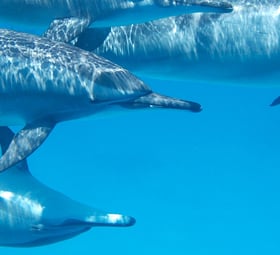
    Or you may go on an ocean safari and go searching for whale sharks and dolphins to take photo ID shots and record behavioural data,

    12:30Time to either return to your accommodation for lunch after an action packed morning!

    14:00 Go to the office and enter data onto our databases of the research work you did that morning

    15:00Depending on the time of year – you may be collecting data on humpback whales from the top of the sand dunes, uploading photo IDs into the database, conducting turtle nest surveys or improving the beach environment with a clean-up collection.

    16:30 Return back to your accommodation and share your day’s adventures with other volunteers, maybe even a quick swim in the ocean!

    18:00 Enjoy a delicious evening meal and relax...


    Free-time activities

    Mozambique is world famous for its idyllic tropical beaches on the Indian Ocean. As a former Portuguese colony that has come out of a prolonged civil war, it is now booming as quite possibly Africa’s top beach destination. Tofo is a laid-back beach village in ...

    Free-time activities

    Mozambique is world famous for its idyllic tropical beaches on the Indian Ocean. As a former Portuguese colony that has come out of a prolonged civil war, it is now booming as quite possibly Africa’s top beach destination. Tofo is a laid-back beach village in southern Mozambique and offers some of the best opportunities in the world to snorkel in the wild with the world’s biggest fish – the whale shark. With diverse coral reefs, whales, manta rays, dolphins and nesting turtles Tofo is a marine paradise and yet it is relatively close to the vibrant historic trading port of Inhambane. You will experience the laid-back beach lifestyle of this colourful and vibrant country. You will take an ocean safari to snorkel with the magnificent whale shark and also have a full day kayak trip across the blue waters to the palm fringed islands in the Inhambane Bay. If you are a certified diver you will have the opportunity of exploring the spectacular fish life of the coral reefs!

    There are plenty of optional extra activities including beach horse rides, quad biking, mangrove kayaking, surfing, body boarding, deep sea fishing and catamaran cruises.  Mozambique is a true gem on the east African coastline, an unspoiled paradise waiting to be explored! 


    Requirements

    Requirements

    Minimum Age: 18 years

    In order to join the program you need to be at least 18 years old on the program start date. There might be exemptions if you can provide the permission of your legal guardian(s) or if your are accompanied by your parents.

    Language Skills

    You need to speak English (basic level)

    Education Requirements

    at HIGH SCHOOL level

    Nationality Restrictions

    No restrictions. Helping hands from all over the world are welcome.

    Other Skills

    In order to participate in project activities you will need to be able or willing to learn to scuba dive. An internationally recognised diving course is included in the programme - although if staying for 2-weeks you must already have your PADI Open Water license and a course is not included in the two week fee . You will also need to be a capable swimmer (able to swim 100m unassisted) and snorkeler. Being able to hold your breath to dive down would be an advantage but is not required.

    Time Commitment

    Your helping hand will be required on Monday, Tuesday, Wednesday, Thursday and Friday from 07:30 - 15:30

    What's Included

    What's Included

    On-site Services

    INCLUDED IN THE COST

    Research dives and ocean safari’s to collect data

    Comprehensive 24 hour, 7 day a week support from All Out Africa

    Volunteer projects specifically designed to enable you to make an active contribution during your stay

    Support of volunteer project coordinators who are experts in their fields which ensures the volunteer experience is valuable

    Comprehensive orientation to the country

    All food and accommodation throughout your stay

    ● All dive equipment while on research dives. The only exception is a dive hood (optional extra) for colder winter months

    ● Internationally recognised Open Water Diver course for all except 2 week duration - to enrol on the 2 week programme you must already have this qualification as a minimum.  For those who have their Open Water Diver qualification already, an Advanced Open Water Diver course is offered.  For those qualified at Advanced level or above, we can supply the fee for the programme without a dive course.

    (Airport transfers on ARRIVAL day is what is included as a part of your project fee. If you arrive on another day, additional charges may occur.) 

    Airport Pickup at Inhambane Airport

    ARRIVALS

    Airport transfers on ARRIVAL day is what is included as a part of your project fee. If you arrive on another day, additional charges may occur

    DEPARTURES

    When you arrive a member of All Out Africa staff will request your flight departure time and will organise a transfer for you from Tofo to the airport. 

    Accommodation

    ACCOMMODATION 

    During your stay you will be accommodated in Tilak Lodge, in Tofo. Tilak Lodge is in a perfect location, nestled at the top of the sand dunes overlooking the spectacular Tofo Bay. Accommodation is in chalets with a traditional thatched roof, and dorm style accommodation. The chalets have electricity and running, drinkable water, and feature open living areas and ample room to relax outside. The chalets sleep 4 and 12 people respectively, with each bedroom fitted with bunk beds. Beds, mattresses, mosquito nets, sheets and pillows are provided. There are shared toilet and shower facilities, and communal living spaces in each chalet, and a swimming pool and relaxation area.

    The accommodation is next door to the dive centre and All Out Africa office, and just a 30-second walk down to Tofo beach. It is also a very short walk to Tofo village, where there is a market, basic shops, a few restaurants and bars, and a number of beach activities available. The nearest town, Inhambane, is approximately 25 minutes away by car. 

    If you would like private accommodation, our partners at Tilak Lodge charge a roughly ~50 USD/night. Please let us know and payment will likely be processed at arrival.

    Food & Beverages

    MEALS

    Volunteers, interns and students receive 3 meals a day when joining an All Out Africa experience. 

    Breakfast will include a selection from the following items: bread, fruit, eggs and spreads. Lunch can include sandwiches, salads, omelettes and pasta dishes. Dinner is a cooked meal and types of dishes served include pasta, local dishes and stew. Mozambique is a developing country and not all types of ingredients are readily available. Local cuisine is served to ensure freshness and enhances your cultural experience.

    Vegetarians and most food allergies can be catered for. In order to fully support you during your experience, please advise us at time of booking if you have any food allergies or preferences, so we can cater for these in our meal plans. We will do our best but be prepared your food selection may not be as varied as other participants. If your food allergies/preference are quite restrictive, we may require you to pay an additional fee to allow us to cater for you. 

    Internet Access

    Limited access at the project site
    You don't have to pay anything yet

    What's NOT included?

    What's NOT included?

    Flight Tickets

    The nearest airport is Inhambane Airport (INH) in Inhambane. We assist you to find cheap flights to Mozambique. FIND CHEAP FLIGHTS

    Travel Insurance

    Going abroad is an adventure and it is always best to be prepared. Sudden illness or injury, cancellation or theft - a travel insurance for Mozambique provides security and is a plus to have. GET A QUOTE

    Vaccines

    If you are intending to volunteer in Mozambique you should seek medical advice before starting your social journey. Check your required vaccinations for Mozambique. VACCINE CHECKER

    Details on arrival

    Start date for this project is the first Monday of the month throughout the year, with the exception of December when the project is closed.

    *Min of 3 weeks required to participate in the international certified PADI course. 

    BEFORE YOU BOOK YOUR FLIGHT

    All our volunteer projects commence on the first MONDAY OF THE MONTH, as this is when All Out Africa staff can personally collect you from the airport.

    Airport transfers on this day is what is included as a part of your project fee. If you arrive on another day, additional charges may occur.

    If your project/expedition begins in Mozambique you should fly to Inhambane. You may do this by flying to Johannesburg in South Africa or Maputo in Mozambique then take a connecting flight to Inhambane. To ensure your journey is fluid and easier, please try and book your connecting flight to Inhambane on the same day that your flight lands in OR Tambo or Maputo.

    Please make sure you arrange a valid visa for Mozambique prior to flying. You can get a visa in Mozambique on arrival only if your country of origin does not have a Mozambican embassy.

    VISA FOR MOZAMBIQUE

    Mozambique has recently changed its visa policies to allow for more tourists to get their visas upon arrival, but we still request that you reach out to your nearest Mozambican embassy to confirm this is a possibility for you. It is your responsibility to check if you need a pre-arranged visa. Should you need a letter to assist with a visa, please let us know and we will happily assist. 

    ARRIVALS

    You will be given an ‘International Arrival/Departure form’ on your flight – please fill this in on the plane before landing. When you are filling in the Arrival/Departure form please remember that participating with All Out Africa counts as ‘tourism’ for immigration purposes.

    If you transit through OR Tambo International Airport, your first stop will be at the Immigrations Desk where you will have to hand them your passport and your Arrival/Departure form that you would have filled out on your flight. Your passport is stamped/endorsed by the Immigration Officer and he/she will issue you with a visa. You will then proceed to international departures to prepare for your flight to Inhambane.

    If you transit through Maputo, Mozambique you will pass through the Immigration Desk where you will have to hand them your passport and your Arrival/Departure form that you would have filled out on your flight. Your passport is stamped/endorsed by the Immigration Officer and he/she will issue you with a visa. You will then proceed to domestic departures to prepare for your flight to Inhambane.

    For your destination details please write down All Out Africa and if asked for postal address please put: ALL OUT AFRICA, Tilak Lodge, Tofo, Mozambique. You will then enter the baggage reclaim area to collect your luggage. Once you have your luggage make your way to the exit. There you will be met by one of our staff (holding a sign and wearing a T-shirt with the All Out Africa logo).

    DEPARTURES

    When you arrive a member of All Out Africa staff will request your flight departure time and will organise a transfer for you from Tofo to the Inhambane airport. 

    Availability
    Jan Feb Mar Apr May Jun Jul Aug Sep Oct Nov Dec

    Program Fees

    $958 per week 2 - 12 weeks Age 18 - 50+

    Payment methods

    Visa Master Card Maestro American Express PayPal

    NO CREDIT CARD FEES


    Duration

    2 - 12 weeks

    Deposit

    Reserve your spot with just a few clicks and a small, secure deposit. You can pay by credit card, PayPal, or other convenient methods.


    Final Payment

    You’ll agree on the final payment method with your local organization during the application process. This final payment is only due closer to the start of your trip.

    You don't have to pay anything yet
    4.5
    Top Pick
    One of the top picks on Volunteer World, according to travelers

    Location


    Meet your project coordinator

    Lucy
    15
    reviews
    4.52
    Fantastic
    2004
    Founded

    Verified

      Moderate response rate
    Spoken languages: English
    Travel safely by using Volunteer World for your communication and bookings. This way, you can benefit from the Flex Option, Refund Guarantee, and Resolution Support.

    You might also be interested in

    Contact Lucy
      Moderate response rate
    English

    Most volunteers ask about


    Do you have any more questions? Send a message to Lucy
    Please don't share personal contact details for your privacy

    Travel dates

    1. - 1. Jan 1

    Book with Flex Option!

    Choose new departure dates or change to a different volunteer program at no extra costs within 12 months.

    Complete Support for Every Volunteer

    This helps us run our platform and offer essential services like Comprehensive Support, Refund Guarantee, Flex Option without rebooking costs, and Price-Guarantee. This includes VAT.

    Price details