About The Placement
We partner with schools across all levels of the Ghanaian education system:
-
Primary School (Kindergarten/Nursery also available on site)
-
Junior High School (Qualified teaching volunteers only)
-
Secondary School (Qualified teaching volunteers only)
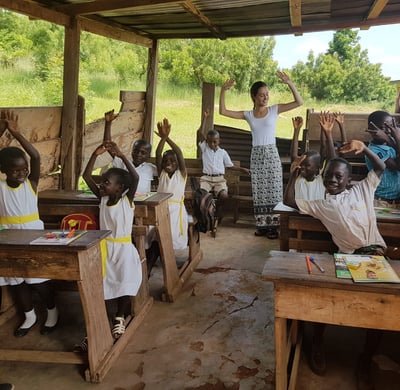
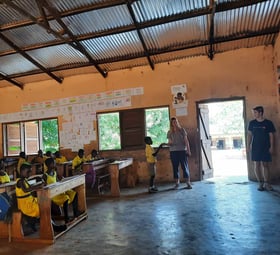
Most volunteers support our local Primary Schools & Kindergarten classes, which are often co-located and allow for flexible timetabling. Junior High School & Secondary School placements are typically reserved for volunteers with teaching qualifications or relevant experience, as students at this level are preparing for university entrance.
Within our partner schools, core subjects include English, Mathematics, Science, French, Local Language, and Religious & Moral Education. Computing, sports creative arts, and music are enthusiastically embraced by the students but are frequently limited by a shortage of materials and access to technology. Volunteers bring valuable energy and resources to help bridge these gaps.
Why This Placement Matters
Class sizes in Ghana continue to grow, yet schools rarely have substitute teachers or learning support staff. Lessons are traditionally very lecture-based and practical activities are uncommon until secondary level. By volunteering, you help to:
-
Strengthen schools in underserved communities with additional human resources.
-
Introduce fresh, student-centred approaches to teaching and lesson planning.
-
Provide supplementary learning materials and creative opportunities otherwise unavailable.
Volunteers do not replace teachers; they enhance and support existing staff. Ghanaian teachers are committed professionals, and you will usually work alongside them, co-teaching or assisting students who need extra help. This approach allows children—especially those still gaining confidence in English—to receive more personalised attention.
Across Ghana, particularly in semi-rural and rural communities, classrooms are often filled beyond their intended capacity. Teachers work tirelessly but have limited access to substitutes, teaching assistants, or modern learning resources. Lessons are traditionally delivered by dictation, leaving little room for interactive or practical learning. As a result, students who struggle with English—the language of instruction—can easily fall behind.
Your presence helps to bridge this gap. By volunteering, you are not only lending an extra pair of hands in a busy classroom but also sharing your knowledge, skills, and fresh perspectives with students and teachers alike. This infusion of creativity can make lessons more dynamic and engaging, encouraging critical thinking, problem-solving, and improved communication skills.
Beyond the classroom, your contribution also strengthens the wider school community. Your support allows teachers to dedicate more time to lesson preparation or to give individual attention to struggling students. The new ideas you introduce—whether it’s a low-cost science experiment, a creative arts activity, or an innovative reading programme—can have a lasting impact, remaining in the school long after you leave. In this way, the placement not only benefits students directly but also helps build the capacity of teachers and the school system as a whole.
What’s Included
Shared volunteer accommodation in a modern house in semi-rural Kwahu with views of surrounding forests. Utilities such as electricity, running water, and kitchen facilities are provided.
-
Airport pickup on arrival.
-
Pre-departure support and access to our volunteer portal.
-
24/7 in-country support, with a local team member living on-site or nearby depending on volunteer numbers.
Your contribution directly sustains this support structure, enabling us to employ local staff and ensure volunteers have safe, comfortable living conditions.
Getting to Your Placement
We work with a network of local and nearby schools. Volunteers generally use shared taxis to travel to their placement, which are readily available and affordable. Our team will guide you on routes, group transport, and local tips. After school, volunteers can easily reach town to shop, meet friends, or explore the area.
Your Role
During your induction, we will discuss your interests and comfort level to find the best fit. You may start by assisting a teacher or, depending on your experience, be entrusted with your own class. No two days are the same on this placement. Depending on your background, confidence, and interests, your role might involve:
-
Classroom Teaching – Leading lessons independently with support from the host teacher, introducing engaging activities, and adapting textbook content into interactive formats.
-
Teaching Assistance – Supporting teachers during lessons, helping to manage large classes, and working with small groups or individuals who need extra attention.
-
Curriculum Enrichment – Incorporating creative arts, sports, or practical exercises into existing lesson plans to give students a more holistic learning experience.
-
After-School Activities – Organising clubs, tutoring sessions, or reading groups to support children outside standard classroom hours.
You will be encouraged to spend time at the volunteer house preparing lesson ideas using the teaching resources and materials available. This preparation not only helps you feel confident in the classroom but also gives you the chance to plan creative, low-cost activities that can be easily repeated by local teachers. Over time, you’ll become an integral part of the school’s team—someone students look forward to seeing and teachers rely on for support and inspiration.
One recent volunteer turned a “Solid, Liquid and Gas” science topic into a simple classroom experiment followed by student-made posters and a new display board—turning a routine lesson into an ongoing learning resource for the whole school.
Working Relationships
Building meaningful relationships is at the heart of this placement. We work hard to ensure volunteers are integrated into the life of the school rather than just “visiting” it. This approach benefits not only the children, but also the teachers and you as a volunteer, helping you gain a deeper understanding of Ghanaian education and culture.
-
With Local Teachers – You will be paired with a class teacher or subject teacher who becomes your day-to-day point of contact. Together you will plan lessons, share ideas, and adapt activities for the class’s needs. This collaborative approach allows you to learn from their experience of teaching in Ghana while they benefit from your fresh perspectives and resources. Over time, you’ll build mutual respect and trust, making it easier to introduce new teaching methods or activities.
-
With School Leadership – Headteachers and senior staff are actively involved in welcoming volunteers. They oversee your placement, answer questions about school policies, and ensure that your role complements the school’s goals. Regular check-ins give you a chance to discuss challenges, celebrate successes, and adjust your timetable if necessary.
-
With Other Volunteers – When numbers permit, we place volunteers in small groups at the same school or nearby projects. Working alongside others fosters a sense of teamwork and shared learning. Volunteers often swap lesson plans, co-run after-school clubs, or partner up for small-group support. This camaraderie provides an extra layer of support and makes the experience more rewarding.
-
With Our Local Team – A member of our staff visits each project regularly and is always available to mediate, advise, or help implement new ideas. They can assist with cultural nuances, suggest low-cost teaching resources, or simply act as a sounding board if you need reassurance. Because many of our team members live in the same communities, they also help you connect with local families and traditions beyond the school gates.
-
With the Community – It’s common for volunteers to be invited to teachers’ homes or local events as a gesture of appreciation. Sharing meals, attending festivals, or taking part in community activities helps you gain a richer perspective on Ghanaian life and builds bonds that often last well beyond your placement.
This network of relationships means you’re never working in isolation. You become part of a team—teachers, headteachers, fellow volunteers, and our local staff—all united in the shared goal of improving educational opportunities for children.
Volunteer Expectations
We welcome volunteers from all backgrounds, and no formal teaching qualification is required. What matters most is your willingness to contribute, your openness to learning, and your respect for the community you’re joining.
We ask volunteers to bring the following qualities:
-
Enthusiasm & Energy – A positive attitude goes a long way in the classroom. Even small efforts—like smiling, greeting children warmly, or trying a local greeting—can transform your experience.
-
Flexibility & Adaptability – Class schedules, lesson topics, or school events can change at short notice. Being open-minded and patient ensures you’ll get the most from your placement.
-
Empathy & Cultural Sensitivity – Remember you’re a guest in the community. Being respectful of local customs, dress codes, and teaching methods helps build trust and makes your contribution more effective.
-
Reliability & Commitment – Children thrive on consistency. We ask volunteers to attend their placements Monday to Friday (with occasional flexibility for travel or illness) so students can build a routine and benefit from your presence.
-
Initiative & Creativity – You’ll often have the freedom to suggest or lead activities. Taking initiative—planning a game, preparing a simple experiment, or creating a visual aid—can make a huge difference.
In return, you’ll gain practical classroom experience, cross-cultural skills, and the satisfaction of knowing you’ve contributed meaningfully to the education of Ghanaian children. By approaching your placement with professionalism and an open heart, you help create an environment where both you and the students can grow.
Our Commitment to You
We are available any time, day or night, to support you—whether you’d like help organising an after-school club, adjusting your placement, or planning weekend travel. Our local team at the volunteer house is also happy to share insights into the area and Ghanaian life.
From the moment you express interest in volunteering until the day you return home, our team is here to walk alongside you. We know that travelling to a new country to volunteer can be exciting but also a little daunting, and we see it as our responsibility to ensure you feel supported, informed, and welcomed at every stage.
-
Before You Arrive – You’ll receive clear pre-departure information, access to our volunteer portal, and direct communication with our team. We’ll help you prepare for your placement, advise on what to pack, answer cultural questions, and assist with travel planning.
-
Arrival & Orientation – A member of our team will meet you at the airport and accompany you to the volunteer house. We provide an in-country orientation to introduce you to Ghanaian culture, the local area, and your placement school. This includes practical information, safety guidance, and an overview of your role so you feel ready and confident from day one.
-
During Your Placement – You’ll never be left on your own to figure things out. Our local support team lives on-site or nearby and is available 24/7 for questions, emergencies, or simply to chat. A staff member visits schools regularly to check on your progress, help you resolve challenges, and ensure you have everything you need to succeed. If you’d like to organise an after-school club, change your placement, or explore new teaching ideas, we’ll guide you step by step.
-
Beyond the Classroom – We’re also here to help you get the most out of your time in Ghana outside school hours. Our team can advise on weekend trips, local events, and cultural experiences. We want you to feel at home and to see the richness of Ghanaian life, not just the inside of a classroom.
Continuous Support & Feedback – We keep open channels of communication so you can give feedback on your experience and we can continually improve. Your input helps shape the way we run our programmes and ensures that future volunteers and partner schools benefit from your insights.
What to Bring
We recommend bringing teaching aids and arts-and-crafts materials, as local supplies are limited. Basic stationery and photocopying are available locally, but extra resources such as activity sheets, flashcards, or creative tools will be invaluable.
Materials are limited in many of our partner schools, so anything you can bring to enhance the learning environment is appreciated. While not compulsory, we recommend volunteers bring:
-
Teaching Aids – Flashcards, educational posters, simple science kits, phonics cards, and storybooks suitable for different reading levels.
-
Arts & Crafts Supplies – Crayons, coloured pencils, markers, paints, brushes, glue sticks, scissors, craft paper, and stickers to make creative lessons possible.
-
Activity Resources – Laminated activity sheets, printed games, or templates that can be reused by local teachers after you leave.
-
Sports Equipment – Lightweight items such as balls, skipping ropes, cones, or team bibs for physical education lessons or after-school clubs.
Basic stationery like pens and notebooks is available locally, but specialty materials can be difficult to find or costly. Bringing a small selection of your own will go a long way in enriching your classroom sessions. If you have access to online teaching resources, consider downloading lesson plans or printable worksheets before you arrive, as internet connectivity can be intermittent in some areas.
During School Holidays
If your placement coincides with school holidays, we organise holiday schools at one of our partner institutions. Volunteers work together to run informal sessions such as arts, reading, English, sports, and games. This provides continuity for students and valuable childcare support for parents working in farming or trading.
School holidays typically occur around Easter, August, and Christmas. Exact dates vary, and our team will advise you as they are announced. Leading up to vacation periods, you may also help with exams, invigilation, or support on our other community projects.