Montenegro Dolphin Research (MDR), offers an enriching and immersive internship program that extends beyond the conventional role of a data entry assistant. As an intern, you play an active and predominant role in both sound research and conservation efforts, particularly in a region where your contribution is profoundly impactful.
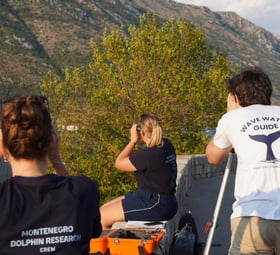
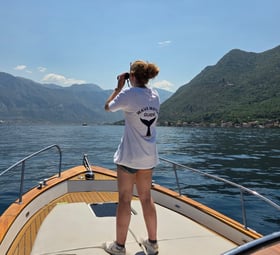
Upon completion of comprehensive field protocol training, interns transition into the role of research associates, engaging in both land surveys (utilizing theodolite operation) and boat surveys (focused on photo-identification and acoustic techniques). Two dedicated days are allocated for fieldwork, while an additional two days concentrate on honing essential data analysis skills, spanning from photo-identification techniques to GIS mapping. The culmination of the week allows interns a unique opportunity to plan and execute public outreach initiatives, ranging from organizing art galleries to participating in beach cleanups or delivering educational talks in local schools.
This internship is a unique gateway for graduates seeking hands-on experience in marine mammal research and undergraduates aspiring to earn academic credits through an immersive learning experience. Additionally, it serves as a platform for developing scientific projects that could contribute to Bachelor's or Master's theses. While a minimum stay of two months is recommended to complete the basic training, applications are welcomed from individuals whose genuine passion for marine mammals aligns with a strong commitment to learning and contributing to conservation efforts.
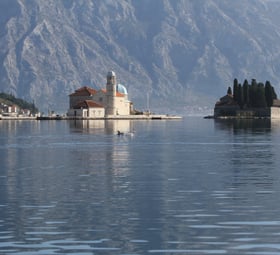
Beyond the remarkable experiences gained at MDR, interns have the privilege of exploring the diverse landscapes of Montenegro. From the majestic black mountains to crystal-clear lakes, historic towns, and national parks, the country offers an incredible variety of outdoor activities. Montenegrin coastal waters, brimming with marine life yet scarcely explored, provide interns with a unique opportunity to contribute to the study and conservation of these fascinating creatures.
Choosing to study Montenegrin dolphins with MDR not only immerses individuals in the adventure of exploring uncharted wildlife but also positions them as contributors to positive change for our blue planet.
On a broader scale, Montenegro Dolphin Research, pioneers the first long-term study of marine mammals in Montenegrin coastal waters. The project aims to address crucial questions about marine mammal abundance, distribution, and behavior, defining critical habitats, and investigating the impacts of major threats such as tourism and seismic practices. The initiative places significant emphasis on promoting and implementing awareness initiatives targeted at the local community, fostering a holistic approach to marine mammal conservation.
Joining the MDR team provides individuals with a unique and comprehensive opportunity to gain scientific and outreach skills, enabling them to make a meaningful impact in the dynamic field of marine mammal research and conservation.
MONTENEGRO AND ITS NATURE
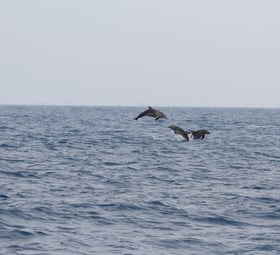
The nature in Montenegro is wild and still uncontaminated: running from the majestic black mountains, to the crystal clear lakes and rivers and from the historic towns to the national parks, this small country offers an incredible variety of landscapes and outdoor activities. Montenegrin coastal waters are extremely rich in marine life, but yet barely explored. At least two species of marine mammals can be found here, the most common of which are bottlenose dolphins followed by striped dolphins. Unfortunately these animals, like many others worldwide, are experiencing significant declines caused by human-related activities. By choosing to study the Montenegrin dolphins with us, you can be part of the change!
WHO ARE WE LOOKING FOR
Our scientific work is supported by the precious help of volunteers, interns and students, coming from all over the world and motivated to have a positive impact on marine wildlife protection and conservation. We offer both volunteering and internship positions: this is a valuable opportunity for graduates that wish to gain experience in the marine mammal research field, and undergraduates that would like to obtain internship academic credits. It could be used to develop a scientific project for a BSc or MSc thesis. However, we are also open to accept applications from anyone whose passion for marine mammals and willingness to learn are strong and sincere. We recommend a minimum stay of 2 months to complete the basic training.
FIELD WORK AND RESPONSIBILITIES
- Performing land-based surveys at least three times a week, including during sunrise and sunset hours
- Performing boat-based surveys once every month (occasionally more if possible)
- Collecting dolphins sightings and behavioural data, as well as environmental and anthropogenic data
- Learning survey techniques (Spatial-temporal dolphin distribution, Theodolite operation, Behavioural data collection, Photo-identification, Human impact measurements) and using them in a practical setting
- Operating the necessary software used in the field (Pythagoras)
- Data entry, data manipulation and data analysis using GIS, Mark, Distance and R software
- Cataloguing and matching dolphins using photo-identification software
- Raising stakeholder awareness through conservation actions and promoting citizen-science activities
- Using social media to disseminate our work to the wider public
TRAINING
Our team will provide lectures and field work training. Volunteers and
Interns will be given the chance to learn some of the most popular
methodologies in marine mammal research including:
- GIS mapping
- Theodolite operation and Pythagoras software
- Photo-identification
- Discovery software
- Population size estimations through Mark and Distance
- Survey design
- Efficient usage of Excel
- R for statistical analysis
- Systematic data collection and data analysis
For Interns it also includes:
- Personal project and thesis supervision
- Additional courses related to the selected subject
- Project, report and manuscript writing skills
Additional training for a fee:
- Marine Mammal Observer & Passive Acoustic Monitoring,
Certificated by ACCOBAMS;
- Acoustics using PamGuard (2 days)