Login

Select travel dates to see prices

Very Good 4.33rating (35)

Forest Conservation Research Assistant

location
1 - 12 weeks  ·  Age 18 - 50+
Verified
Volunteer project with the highest quality. This project sets unprecedented standards in quality - an unparalleled level of excellence.

Highlights

  • Explore Madagascar's remarkable ecosystem and iconic wildlife.
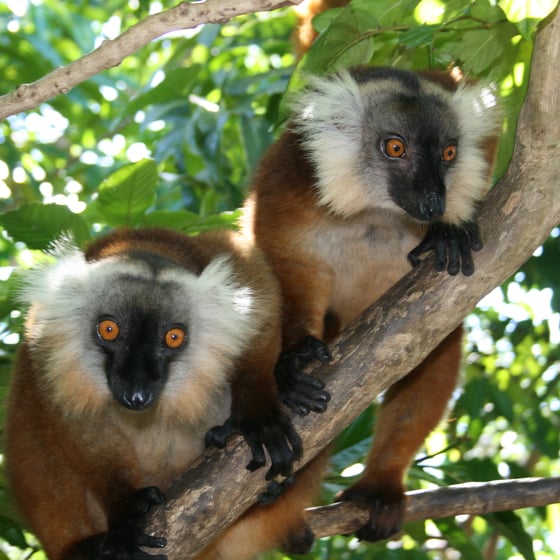
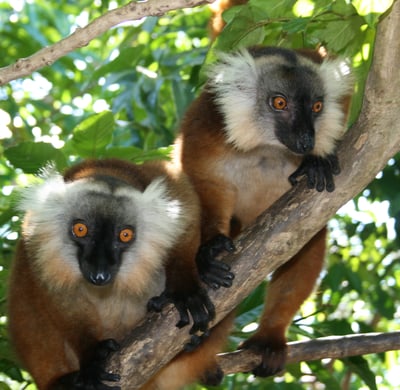
  • Care for lemur and other species in the forests of Nosy Komba.
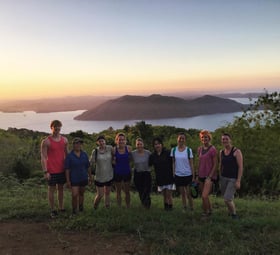
  • Enjoy a dynamic and adventurous environment with other young people.

Highlights

  • Explore Madagascar's remarkable ecosystem and iconic wildlife.
  • Care for lemur and other species in the forests of Nosy Komba.
  • Enjoy a dynamic and adventurous environment with other young people.
  • Help collect and sample important data for the protection of endemic species.
  • Stay at MRCI's Turtle Cove camp on Nosy Komba, an island where you will immerse yourself in nature.

  • You don't have to pay anything yet

    Especially good for

    Age 18+
    Singles
    Couples
    Groups
    50+

    About the program

    MRCI’s Forest Conservation Program involves long-term monitoring of the forest on Nosy Komba Island as well as the diversity and abundance of its endemic wildlife.

    Forest Conservation Program: 

    Madagascar Research and Conservation Institute's is a unique opportunity to explore Madagascar's remarkable ecosystem and encounter its iconic wildlife.

    The MRCI Forest Conservation Program on Nosy Komba, known as 'Lemur Island,' focuses on preserving the threatened ...

    About the program

    Forest Conservation Program: 

    Madagascar Research and Conservation Institute's is a unique opportunity to explore Madagascar's remarkable ecosystem and encounter its iconic wildlife.

    The MRCI Forest Conservation Program on Nosy Komba, known as 'Lemur Island,' focuses on preserving the threatened Sambirano forests in Northwest Madagascar through active restoration and sustainable practices.

    Our program includes mangrove planting reforestation, alien plant removal, seed collection, composting, nursery activities, and sapling planting. Please note that some activities, especially mangrove planting, are seasonal and may not be available all year round.

    MRCI works with the National Parks Department of Madagascar, with volunteers assisting in monitoring lemurs, and other wildlife, including bat acoustic monitoring, on Nosy Komba and in the Lokobe Forest Reserve. Using ultrasonic detectors to record bat calls alongside other survey methods, volunteers help collect valuable data that is shared with the National Parks to support long-term conservation efforts.

    Accommodation

    Volunteers stay at MRCI's Turtle Cove camp on Nosy Komba, an island with no roads and challenging forest paths, thus moderate physical fitness is required.

    Every alternate week, volunteers explore the forest on Nosy Komba through various walks and overnight campouts at either the Church or Baobab. Accommodation remains very basic and the cost is included in the program fee, benefiting the local community.

    Every other week, volunteers conduct overnight guided walks in Lokobe Reserve. Accommodation is basic, with tented beach camps on the forest edge. Meals are arranged on-site through a local restaurant to support the community. Volunteers can upgrade at an additional cost to private tents with mattresses or private bungalows, subject to availability, arranged with the local community leader on-site.

    Program Fees

    Fees cover staff, transportation, camp maintenance, equipment, meals, and other expenses. In cases where surplus funds are available from the teaching program, these funds are directed towards the MRCI community program to construct and renovate local schools and clinics.

    Additional Activities

    For adventurous volunteers, we offer additional optional off-program excursions to the Ankarana Forest Reserve near Diego Suarez. Costs vary based on the number of participants and include transportation, guides, and accommodation. Ensure safety and standards when considering other operators offering lower prices.

    Age: Our volunteers range in age from 18 to retirees and everyone in between, though most are in their early to mid-twenties.

    Number of Volunteers: MRCI’s research centre at Turtle Cove can accommodate up to 54 volunteers at a time across all programs. There are usually between 10 and 20 volunteers participating in the Forest Conservation program at any given time.

    Languages Spoken: All program staff and volunteers must be able to speak, write and understand English. Our program staff and volunteers come from all over the world and speak a myriad of other languages in additional to English. Locally, our operations staff and the people of Madagascar speak Malagasy and some French. Volunteers have the chance to attend free Malagasy lessons offered on camp and learn more about the language and culture in this beautiful country.

    Essential info: Volunteers are expected to have their own health insurance. Vaccinations are not typically required to enter Madagascar, however this may vary depending on your travel path. We recommend consulting a travel doctor about vaccinations and medications. Recommended vaccinations for Madagascar include: yellow fever, tetanus, Hepatitis A, Hepatitis B, typhoid, and rabies.

    In addition, we recommend carrying preventative agents with you including sun screen, after sun lotion, mosquito repellent, re-hydration supplements, anti-malarial medications, and anything else recommended by your doctor.  There is access to good, fairly priced medical care here in country if needed. Due to the hot, humid climate, it is incredibly important to drink enough water. We have filtered drinking water available on camp; just be sure to bring a good reusable bottle.

    What Is included in the fee: Forest volunteers receive training on species identification, conducting field surveys, methodology, equipment set up and data collation.

    Volunteers also receive:

    • Sleeping accommodations for the duration of their volunteer time
    • Three meals per day, seven days per week on camp
    • Supervision and training by staff
    • Overnight hike to a church village high up near the peak of Nosy Komba

    Insurance: Volunteers are expected to purchase their own health insurance.

    Not Included: 

    • Flights
    • Visa costs
    • Personal items

    Currency:  In Madagascar the official currency is the Malagasy Ariary (MGA), which can only be exchanged in Madagascar. There are a number VISA ATMs located in Hellville which volunteers can draw cash from. We do however advise that you bring some Dollars and Euro’s along with you to purchase the tourist visa upon arrival. 

    Passport and Visa:  All visitors require visas and a one to three month single entry visa may be obtained on arrival at the airport. We do recommend you check with the Consulate General as visa requirements can change at any time. A passport valid for 6 months after date of return is required. Please ensure you have at least two blank pages available in your passport before commencement of travel.

    VISAS 30-Day visa: 35 Euros / 37 USD 60-day visa: 40 Euros / 45 USD 

    Most nationalities can get a visa upon arrival at the airport in Madagascar or the Madagascar embassy in the country of departure. You can purchase either a 30 or 60-day visa. There are no ATMs or credit card facilities at the airports so you will need to bring enough cash to pay for your visa when you land. The visa costs are as follows: * Visas may be extended to 90 days for $75 once in-country Due to its structure, this program is classified as a tourist trip. Volunteers participate on a project for three months or less, work an average of three to five hours daily (not full-time), and do not receive any pay or free accommodation/meals in compensation for work. That qualifies these types of trips as “tourist” trips, therefore, we recommend you select “tourism” as your reason for travel on your visa. Other visa types may be available, however, they are often unnecessary, expensive and time-consuming.

    What to bring along:

    • Personal Items - Essential Items for all Volunteers
    • Lightweight waterproof rain jacket
    • T-shirts/vests
    • Light long-sleeved sweatshirt/ jumper/ fleece
    • Trousers (suitable for going into the forest)
    • Shorts
    • Underwear
    • Swimming costume/bikini/board shorts
    • Sunhat
    • Sunglasses
    • Walking boots or good trainers /sneakers
    • Flip-flops
    • Day pack (waterproof)
    • Dry bag/ziplock bags that will keep items dry
    • Lightweight single person mosquito net
    • Cotton sleeping bag liner and/or single sheet & pillow case.
    • Sleeping bag if coming in the cooler months (June-August)
    • Towel or sarong
    • Toiletries (soap, shampoo, razor, tampons, toothpaste, toothbrush)
    • Sunscreen (water-resistant, preferably biodegradable)
    • Insect repellent
    • Head torch (with rechargeable batteries)
    • Photocopy of passport, travel insurance details, dive qualifications (if relevant) and other important travel documents
    • Debit card/credit card
    • Spending money
    • Solar Panel Charger
    • Personal Medical Kit (example items: Anti-malarial tablets; Paracetamol / Ibuprofen; Antihistamine pills / cream; Rehydration tablets / sachets; Immodium; Multivitamins; Antiseptic cream or spray; Motion sickness pills if prone; Bandage / Plasters; Dressings / Micropore tape; After sun lotion or gel; 
    Optional Items for all Volunteers:

    • Battery pack (to use in conjunction with your solar panel)
    • Mobile phone (you can buy a local SIM card for around US$10)
    •  A padlock to secure personal items
    • Laptop/iPad/iPhone
    • Camera (waterproof)
    • Books
    • Water bottle
    • Sarong
    • A nice set of clothes if you want to go out for dinner or dancing
    • Rash vest
    • Talcum powder
    • Treats/food difficult to get in Madagascar
    • Travel guide (many volunteers find Lonely Planet to be very helpful for preparation and once they are in Madagascar)
    HEALTH CONDITIONS We kindly request that all volunteers inform our volunteer coordinator and senior staff of any health conditions, mental illnesses, disabilities, or other relevant information that may affect their participation in camp activities. Please be assured that any such information will be kept strictly confidential. It is important for us to have this information to ensure that we provide fair treatment and ensure your safety during your stay on camp.

    INTERNET Wi-Fi is not available on camp, however, there is Wi-Fi access in the neighbouring village of Ampang, about a half-hour hike from camp. Volunteers can purchase a local sim card in Hellville along with 2GB of data for $5. 

    MOBILE PHONES Volunteers can bring their mobile phones and purchase a local SIM card and credit for calling and data upon arrival. If their phone’s SIM is locked, they have the option of purchasing a local phone. This is great for keeping in touch with local staff, other volunteers and loved ones at home. Once you have purchased a SIM card and data package, you can access the internet via cell service in most places on Nosy Be and Nosy Komba, including camp. With enough credit loaded on, you can make both domestic and international calls. The country code for calling Madagascar is +261. 

    ELECTRICAL APPLIANCES The most common type of wall plug in Madagascar is the typical European rounded twoprong plug (Type C) and the rounded two-prong plug with a hole for the male grounding pin (Type E). The voltage is 20V and the frequency is 50Hz.


    Typical day

    Generally, each program has morning and afternoon activities. After dinner each day, we have a briefing to go over activities for the following day. NOTE: The schedule will vary depending on the project, weather etc. for that day.

    Sample Schedule:

    • 05:00-07:00 Breakfast on camp
    • 06:00-08:00 Start of ...

    Typical day

    Generally, each program has morning and afternoon activities. After dinner each day, we have a briefing to go over activities for the following day. NOTE: The schedule will vary depending on the project, weather etc. for that day.

    Sample Schedule:

    • 05:00-07:00 Breakfast on camp
    • 06:00-08:00 Start of morning activities on project
    • 12:00 Lunch on camp
    • 14:00 Start of afternoon activities on project
    • 16:00-17:00 Volunteer activities for the day usually conclude
    • 18:00 Dinner on camp
    • 18:45 Board Briefing to go over activities for the following day


    Free-time activities

    Only cash is accepted on Nosy Be and Nosy Komba. There are no ATMs located on Nosy Komba, therefore all cash needs to be drawn ATMs located on neighbouring Nosy Be. The ATMs all take VISA; only one or two will accept MasterCard. Depending on weekend activities and the number of souvenirs and snacks ...

    Free-time activities

    Only cash is accepted on Nosy Be and Nosy Komba. There are no ATMs located on Nosy Komba, therefore all cash needs to be drawn ATMs located on neighbouring Nosy Be. The ATMs all take VISA; only one or two will accept MasterCard. Depending on weekend activities and the number of souvenirs and snacks purchased, volunteers typically find between $50 and $100 USD per week to be sufficient spending money.

    A few popular weekend activities / places to visit are listed below. NOTE: Unless marked otherwise, volunteers organize trips to these places on their own, not through MRCI, however there is contact information available on camp from past volunteers on how they booked trips.

    • Lokobe Forest Reserve
    • Discovery SCUBA Dive (through MRCI)
    • SCUBA Dive Training (through MRCI)
    • Explore different areas of Nosy Komba with a local guide and learn about medicinal plants, the endemic wildlife and more
    • Tanikely Natural Reserve
    • Visit Nosy Iranja or Nosy Sakatia (swimming and snorkelling)
    • Whale Shark Watching (seasonal)
    • Visit the Sacred Tree or Sacred Waterfall on Nosy Be
    • Hike up Mount Passot on Nosy Be
    • Visit Lemur Land park on Nosy Be, or the Lemur Park on Ambpang Village on Nosy Komba
    • Ankarana National Park
    • Amber Mountain National Park
    • Visit plantations on the mainland in the city of Ambanja
    • Visit the city of Diego Suarez including the Emerald Sea, the Three Bays, Tsingy Rouge rock formation and more


    Requirements

    Requirements

    Minimum Age: 18 years

    In order to join the program you need to be at least 18 years old on the program start date. There might be exemptions if you can provide the permission of your legal guardian(s) or if your are accompanied by your parents.

    Language Skills

    You need to speak English (intermediate level)

    Criminal Background Check

    required

    Nationality Restrictions

    No restrictions. Helping hands from all over the world are welcome.

    Other Skills

    Our main surveying sites are located on Nosy Komba, a volcanic island. There are no roads and the paths through the forest are not always well trodden. They can be steep, rocky and muddy depending on the season. Reaching the survey sites involves climbing over rocks and up steep mountain trails, therefore a good level of physical fitness is required.

    Time Commitment

    Your helping hand will be required on Monday, Tuesday, Wednesday, Thursday and Friday from 07:00 - 16:00

    What's Included

    What's Included

    On-site Services

    The program fee covers the cost of accommodation, meals, airport pick-up, orientation, staff salaries, equipment, project materials, fuel costs, training and 24/7 in-country program support during your entire volunteer stay.

    Airport Pickup at Fascene Airport

    ARRIVAL INFO:  The program begins on the first and third Monday of every month. The MRCI base sits on a small island called Nosy Komba off the northwest coast of Madagascar. There is no airport, roads or cars on this island, however on the neighbouring island of Nosy Be there is a large port and airport. Please arrive to Nosy Be for pickup the day before your start date so you can meet the team for transport to the volunteer camp on Nosy Komba. The boat ride from Nosy Be to Nosy Komba takes about 45 minutes and the last boat usually departs around 15:00.

    Volunteers may fly directly into Nosy Be Fascene International Airport (airport code NOS), or into the capital city, Antananarivo (Tana for short; airport code TNR). If you fly into Tana, you can take a domestic flight from Tana to Nosy Be, or travel overland via Taxi Brousse or private car to Nosy Be. We can help arrange your overland transport if needed. This journey can take anywhere from 24 to 72 hours depending on number of stops, weather, road conditions, etc. 

    FOR YOUR ARRIVAL:  Once you arrive on Nosy Be, our driver will meet you. He will have an MRCI sign with a turtle logo. Depending on the time you arrive, an MRCI staff member wearing a blue MRCI shirt will also greet you. If there is time before the last boat departs for Nosy Komba, you will be given a tour of the town of Hellville and an opportunity to purchase snacks, a local SIM card, draw money at an ATM, etc. Bear in mind that in addition to time constraints with boat departures, shops and stores all shut during siesta, between noon and 14:30 or 15:00. If you arrive at 12:00 or later (after the last boat departs for Komba), you will need to stay the night on Nosy Be. We can provide you with hotel recommendations if needed. The following day, you’ll meet an MRCI staff member at a predetermined time and place.

    Your transport to camp, including the taxi from Nosy Be airport (or tuk tuk from port) to Hellville and your first boat to camp are included in the program fee. A staff member will accompany you on the boat from Nosy Be to Nosy Komba and give you a tour of MRCI camp on Komba upon arrival.

    FOR YOUR DEPARTURE: You are responsible to arrange and pay for your own transport back to the airport, however we are happy to help you book your transport as needed.

    Accommodation

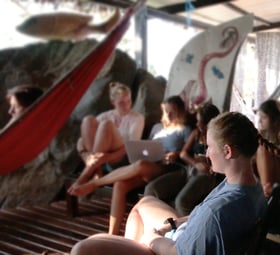
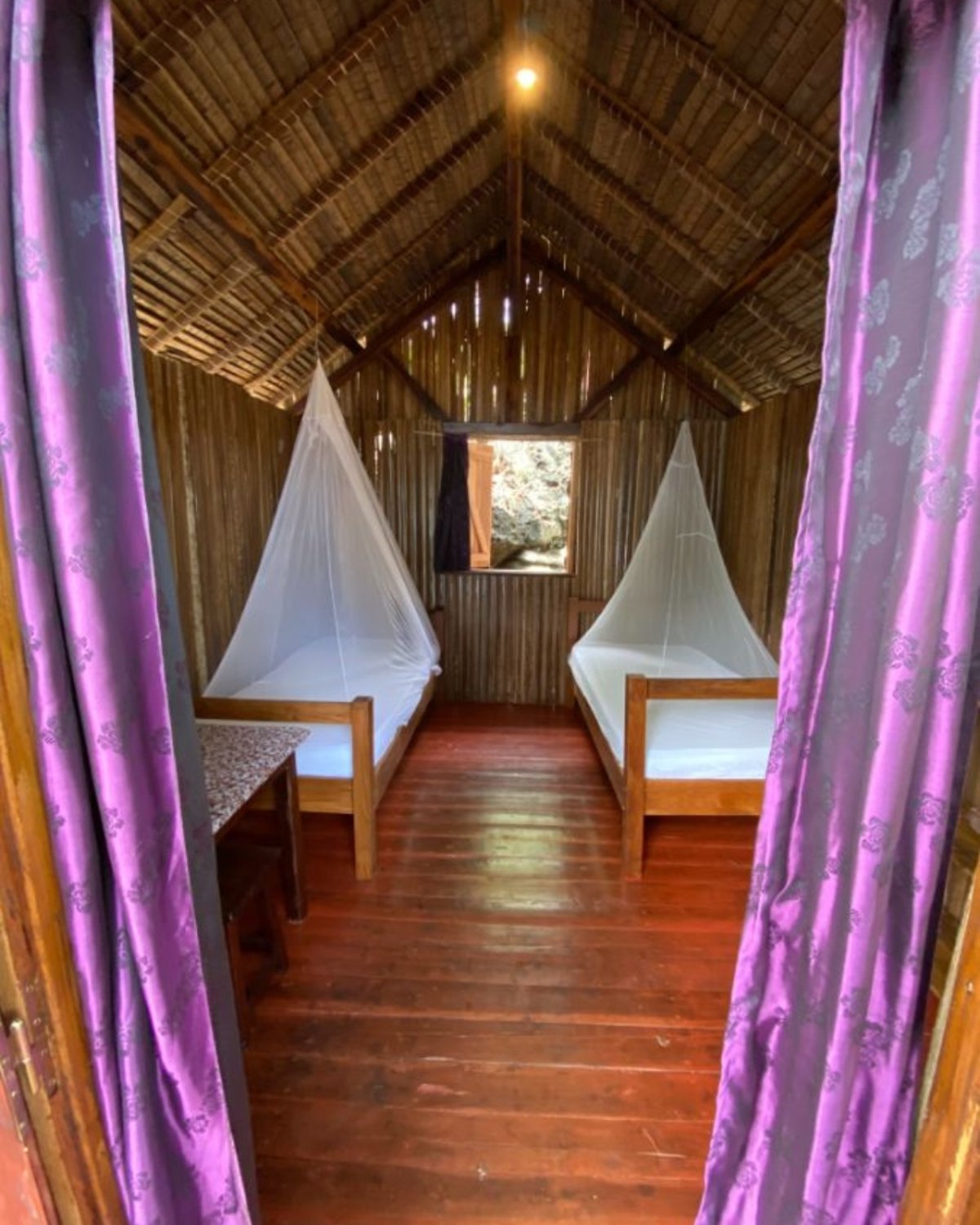
    Our research centre, Turtle Cove, is built into the steep slopes of Nosy Komba as a multi-level compound overlooking the spectacular coral reef below. Climb stone stairs up from an idyllic beach to main house situated above the dive deck and take in the stunning view of the ocean extending far across all the way to Lokobe Forest Reserve on Nosy Be. Main house accommodates senior staff members and serves as a meeting place and hangout for volunteers during the day. Large decks line the front of main house complete with hammocks, bean bags and benches. There is also a work area for volunteers as well as lockable storage boxes available for each hut to store small valuables. Volunteers should also bring a padlock to secure personal items in their luggage when not in use.

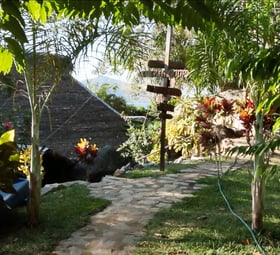
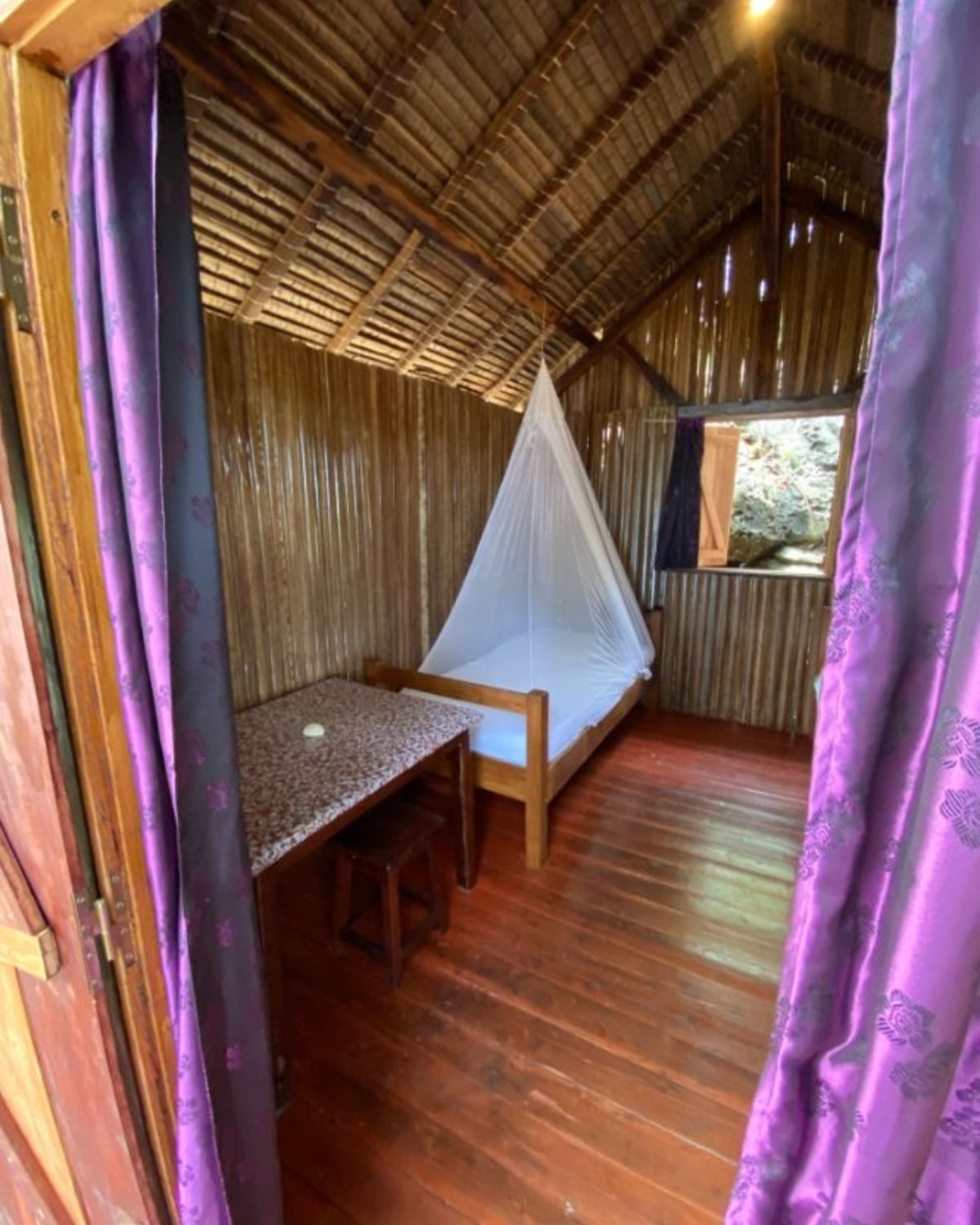
    From the back of main house, follow more stone steps up another level to a separate kitchen and dining hut nestled among vibrant gardens. On this middle level and up another level sit a series of locally built bungalows fitted with bunk beds that serve as volunteer sleeping quarters. Volunteers can expect to share a hut with four to six other volunteers, and will need to bring their own bedding and towels. Also on these two levels, there are several bathroom facilities equipped with running water, flush toilets and cold water showers.

    Turtle cove camp is eco-friendly with solar powered lighting throughout. There are no charging facilities for electronic devices; volunteers are encouraged to bring a solar panel and battery pack to keep their devices charged. Charging ports are available in the neighbouring village of Ampang, about a half hour hike from camp. We do have an onsite generator for staff use, though volunteers are welcome to charge small devices (no laptops) from this if there is space. Bear in mind that in an effort to go green, use of the generator is minimal, sometimes only once per week or less.

    Also keep in mind that we are dependent on the sun for most of our power and rainfall for our water, so conserve power and water as much as possible during your stay.

    When packing, please keep in mind that there are no waste disposal or recycling centres in this area of Madagascar. Therefore, please minimize the amount of disposable, plastic or one-use type items you bring.  Opt for rechargeable batteries instead of single use batteries as we have no way to safely dispose of batteries on the island. We suggest also bringing a solar panel and battery pack if you have any electronics you want to keep charged.

    Food & Beverages

    On camp, three meals per day are provided seven days per week. Each meal is prepared by our on-site cooks using traditional Malagasy cooking methods using fresh, locally grown, seasonally available produce. Most meals have a rice base with beans and vegetables on the side (or over rice). Fruit and vegetables served will change depending on the season and availability of local produce. Some meals will include fish/seafood, beef (zebu), or chicken. Meat, when part of a meal, is typically prepared with a sauce, cut into small pieces, and served over rice. In addition to bananas, breakfast usually consists of either baguettes and jam, eggs or crepes.

    There is a vegetarian option for all meals. Due to logistics and the limitations of our remote location, we cannot provide a vegan option. Vegans can help themselves to the vegetable-based foods prepared, but will also need to supplement their diet with foods purchased off camp.  If you have special dietary requirements, please let us know. We will do or best to provide accordingly, however you should not expect to eat as you normally do at home. Bear in mind that you are volunteering in a remote region of a developing country and flexibility is necessary.

    Internet Access

    Limited access at the project site
    You don't have to pay anything yet

    Add-ons & Experiences

    Private Room (Double Accommodation)
    Enjoy extra space and comfort with our Private Double Room add-on, perfect for couples or friends sharing. Each bungalow includes a double bed or two ...
    $40 / per day
    Private Room (Single Accommodation)
    Upgrade your stay with a private bungalow for extra comfort and privacy during your volunteer placement. Each room features a single bed with mosquito ...
    $35 / per day

    What's NOT included?

    What's NOT included?

    Flight Tickets

    The nearest airport is Fascene Airport (NOS) in Nossi-be. We assist you to find cheap flights to Madagascar. FIND CHEAP FLIGHTS

    Travel Insurance

    Going abroad is an adventure and it is always best to be prepared. Sudden illness or injury, cancellation or theft - a travel insurance for Madagascar provides security and is a plus to have. GET A QUOTE

    Vaccines

    If you are intending to volunteer in Madagascar you should seek medical advice before starting your social journey. Check your required vaccinations for Madagascar. VACCINE CHECKER

    Details on arrival

    MRCI's Forest Conservation Program runs throughout the year.  Start Dates are the 1st and 3rd Monday of each month.

    ARRIVAL DAY: You will be met at the airport (or port) on Nosy Be by our driver or an MRCI staff member. If you arrive before Sunday, you will be dropped off at your hotel after a tour of Hellville. On Sunday, you will meet a staff member at a predetermined time and place for transfer to the volunteer camp on Nosy Komba.


    SUNDAY 

    • 09:00 Meeting at the predetermined meeting point
    • 10:00 Tour of Hellville (if not already complete)
    • 12:00 Boat to camp on Nosy Komba accompanied by a staff member
    • 12:30 Lunch
    • 13:00 Free time to unpack, settle in and meet your hut mates
    • 18:00 Dinner
    • 18:45 Daily Board Briefing (staff will go over the schedule and activities for the following day) 
    MONDAY 

    • 07:30 Breakfast
    • 08:30 Orientation Presentation
    • 10:00 Health and Safety Presentation
    • 11:00 Complete and sign forms and paperwork
    • 12:00 Lunch
    • 14:00 Walk to the neighboring village of Ampang for a tour led by staff 
    • 17:00 May walk or take the teacher boat back to camp (costs 2,000 MGA/person for the boat) 
    • 18:00 Dinner
    • 18:45 Daily Board Briefing
    TUESDAY: First official day on project! Generally, you will be doing hands-on activities integrated with staff and other more experienced volunteers. Staff will go over activities and times after dinner on Monday so you know where to go. 

    NOTE: The schedule will vary widely depending on boats, tides, actual arrival time, etc… The following is an example only and should not be considered an itinerary to be followed upon arrival. Follow the instructions of in-country staff for actual times and stay flexible. Daily life in Madagascar revolves around family, boats and tides. Embrace the ‘mora-mora’ way of life and don’t get into a hurry. Just try to relax and enjoy the journey.  

    Availability
    Jan Feb Mar Apr May Jun Jul Aug Sep Oct Nov Dec

    Program Fees

    $516 per week 1 - 12 weeks Age 18 - 50+

    Payment methods

    Visa Master Card Maestro American Express PayPal

    NO CREDIT CARD FEES


    Duration

    1 - 12 weeks

    Deposit

    Reserve your spot with just a few clicks and a small, secure deposit. You can pay by credit card, PayPal, or other convenient methods.


    Final Payment

    You’ll agree on the final payment method with your local organization during the application process. This final payment is only due closer to the start of your trip.

    You don't have to pay anything yet
    4.3
    Travelers’ Choice
    One of the most loved volunteer experiences, according to travelers

    Volunteer photos

    Location

    Africa > Eastern Africa > Madagascar > Nosy Komba

    Meet your project coordinator

    Danielle
    35
    reviews
    4.33
    Very Good
    2013
    Founded

    Verified

      Very high response rate
    Spoken languages: English
    Travel safely by using Volunteer World for your communication and bookings. This way, you can benefit from the Flex Option, Refund Guarantee, and Resolution Support.

    You might also be interested in

    Contact Danielle
      Very high response rate
    English

    Most volunteers ask about


    Do you have any more questions? Send a message to Danielle
    Please don't share personal contact details for your privacy

    Travel dates

    1. - 1. Jan 1

    Book with Flex Option!

    Choose new departure dates or change to a different volunteer program at no extra costs within 12 months.

    Complete Support for Every Volunteer

    This helps us run our platform and offer essential services like Comprehensive Support, Refund Guarantee, Flex Option without rebooking costs, and Price-Guarantee. This includes VAT.

    Price details