Sustainable Bolivia is a NGO based in Riberalta, the heart of
the Bolivian Amazon. We focus our work on sustainable community
development and conservation actions.
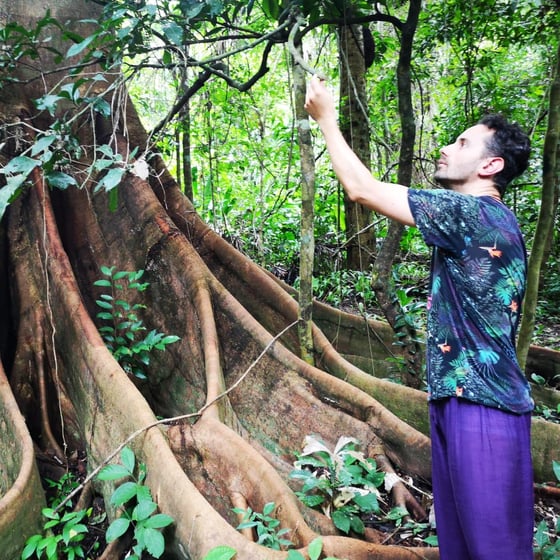
Our volunteers have the opportunity to live and support our work at the Aquicuana Reserve
and it's surroundings. This area of incredible biodiversity is located
about 20 kilometers from the city of Riberalta in the Beni Department of
the Bolivian Amazon. It is home to Lake San José, the plant-medicine
retreat center Pisatahua,
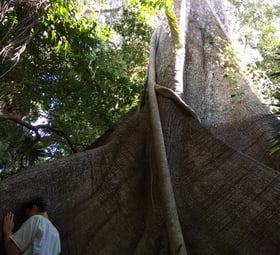
and two rural communities: San José and Warnes. Its name, Aquicuana,
comes from the Tacana native language, meaning ‘land of the giant
trees.’
There we promote initiatives to support education,
scientific research, community development, regenerative agriculture and
conservation actions.
We provide a open space for the community called "Comedor" where
volunteers have internet access so that they can prepare and develop
activities with the community. We also offer a Research Station and
(depending on
availability) accommodation in the city of Riberalta if volunteers want
to visit, shop or go out during the
weekends.
Scientific research is a fundamental pillar
because it contributes to the quality of life and well-being of people,
in the training of new professionals and in the development of
professionals who are heading towards research. Your work would
contribute to the community development here at Riberalta and the
conservation of the Aquicuana Reserve.
Pisatahua is an integrative plant-medicine retreat, located in the Aquicuana Reserve. Sustainable Bolivia is Pisatahua’s sister non-profit. Sustainable Bolivia also hosts Pisatahua volunteers in our communal home found in the city.
Sustainable Bolivia, in partnership with Pisatahua, is currently receiving applications for a Plant Medicine Inventory Project. Working with a local informant, the selected applicant will identify, photograph, and help write a guide to Aquicuana’s medicinal & edible plants.
FAQs about Life on the Reserve
What’s available in Riberalta? Fresh markets and a basic supermarket are available in Riberalta. Supplies such as mosquito spray, rubber boots, basic pharmaceuticals, and personal hygiene supplies can be bought in town. Because food is fresh and local, dietary concerns can be worked around as SB’s cooks use few processed foods.
Are there blockades and political protests? Politics are ever changing, but in general Riberalta is mostly free of protests. Riberalta does suffer from petroleum shortages, as does the rest of the country.
How do you get food? What’s the kitchen like? Who cooks? Grocery lists are made communally, or by the cook if there is one on site, and groceries are brought from Riberalta to Aquicuana. There is a small fridge in the kitchen and a 3 burner stove. Storage space is available for those who bring their own dried food or treats (ex> coffee, chocolate, gluten free pasta), but space is shared, so keep your personal items to a minimum. (If you have dietary concerns, let us know and we can work with you to keep you healthy and fed). When only a few people are on site, cooking responsibilities are shared. When more people are on site, a cook is hired by SB as the kitchen is small and can’t accommodate a lot of traffic.
How is the electricity? SB runs on solar power. It is usually reliable, but can go out on occasion. Devices can be charged in the office with type A and C plugs. It is a good idea to have extra batteries or battery packs for devices, especially if you want to charge overnight in your cabin.
Can I swim in the lake? No. Our lake is home to black caiman. It is not safe to swim. You can arrange weekend trips to Lago Tumi Chucua or other safe bodies of water if desired.
Can I drink the water? No. Drink bottled water in Bolivia. On the reserve water comes from a deep well, but is not monitored for whether it’s safe to drink. It is fine to shower, brush your teeth, or use after it has been boiled.
Where do I do laundry? There are laundry sinks on site. You can pay the family who lives on site to do your laundry, or buy soap in town and do it yourself.
What happens to garbage in Aquicuana? All trash is brought off site and disposed of in Riberalta. Please limit single use plastics used on site. Some items are collected for reuse, such as glass bottles, but there is no official recycling available in Riberalta.
Is there cell service? Riberalta has cell service, but it can be unreliable. In some places on the reserve you can get a bar of service but it’s hit and miss. We mostly use starlink for internet access. SIM cards can be purchased in town if desired. Generally the Tigo network has better reception on the reserve. Esims are slightly more expensive than local sims, but offer a convenient solution and don’t usually have to be topped up as frequently.
What is physical accessibility like on the reserve? The space is mostly flat, but there are large puddles and lots of mud during the rainy season. Each cabin has 4 stairs to enter. The space is not wheelchair accessible as forest paths connect different buildings. If you have accessibility concerns, please let us know and we can discuss solutions.
What is access to medical care like? There are pharmacies and a hospital available in Riberalta. Many medications can be purchased without a prescription. In the office we have basic first aid supplies and medications such as ibuprofen. Emergency vehicles do not go to the reserve, so the process of getting to the hospital in an emergency can be quite lengthy. If you have a health condition that may require emergency medical assistance, please consider whether staying on the reserve is safe for you. A homestay in town can be arranged if the reserve is not the place for you.
What time zone are you in? We are in EST with no daylight savings. Daylight is on average from 6am-6pm with some seasonal variation.
Can I receive mail? Mail services are very difficult to access. Don’t plan on receiving or sending letters and parcels.
What’s the weather like? The rainy season is usually from late November to early April. Rains are heavy and frequent. Dry season is generally mid April-mid November. It is always very humid. Temperatures range from 25-35C, with the humidex raising the ‘feels like’ to 40C or above at times. The hottest months are August and September.
What can I do on the reserve in my downtime? During your downtime you can read in a hammock (bring a book or borrow from our small office library), there is a short hiking trail, or you can go out in a boat with pre-arrangement. Taxis can be arranged to take you into town or nearby sites, but generally the weekends are a better time to do this than just for an evening. You can play card games or chat with other volunteers. Because the reserve is far from town, restaurants and bars aren’t an easy option, so just listen to the sounds of the jungle, enjoy the view, and slow down for a while.
Do I need to speak Spanish? Many people in Bolivia don't speak English, and even fewer in Riberalta do. Navigating in Bolivia is easier with some Spanish phrases. Many of our volunteer projects require some level of Spanish, but not all. The lingua franca on the reserve is English as people come from all over to volunteer with SB, but the local staff do not speak English. It would be better to have some basics in Spanish, but it's not strictly necessary
Travel in Bolivia
Riberalta is not a great home base for seeing the rest of Bolivia because it’s far away from the main tourist sites and takes a lot of time and money to get elsewhere. If you want to see more of Bolivia, consider spending a few weeks with a home base in La Paz or Santa Cruz as it's faster and cheaper to get around from there.
There are a few nice places around Riberalta for weekend adventures and taxis can be arranged.
General Bolivia travel tips: There are pickpockets in big cities. Keep your valuables zipped and backpacks on your front in crowded places.
Scammers can pose as police officers and ask you to get in their vehicle or ask for your passport. Keep a photocopy of your passport available to diffuse this situation and never hand over your real passport or get into a vehicle with a ‘police officer’.
Doing Research in Aquicuana Reserve
Very little ecological research has been done in the Aquicuana Reserve and in the Beni department at large. SB is hoping to change that. Currently SB is aiming to better understand the basics of the reserve: what kind of plants, animals, and fungi are present, what kinds of habitats are present, and how the reserve is changing. Our first goal is to create field guides of various focuses to help guide prospective researchers. Next is to understand changes taking place, such as the expansion of marsh grass in the lake and how flooding cycles affect species distribution. Permits are required for any specimen collection in Bolivia. SB has an agreement with a local university, UAB-JB to help streamline the permitting process. Complete specimens cannot be removed from Bolivia and must remain with a Bolivian collection. Large collections of invertebrates, fish, reptiles, and amphibians can be found in the nearby city of Trinidad, in the CIRA and CIBIOMA institutions. We encourage and help facilitate partnerships with local research institutions and these relationships should be reciprocal. Should you need help or equipment from a local institution, expect to share data and samples with them. SB is planning to collect our own research equipment over time, but currently we mostly use our relationship with UAB-JB for specialized equipment.
Currently we have 3 pair of binoculars (Vortex, Meade, and Tasco brands), 2 GPS satellite devices (Garmin etrex 10, Garmin etrex 30), a 30x magnifying lens with light, 3 trail cameras, 1 H5 Zoom recorder, 1 Amscope SE400 microscope, 1 night insect collection sheet, and an Iris 5 in 1 wireless weather station . Any other equipment must be brought or arrangements be made with a research facility for equipment sharing.
If you have a specific project proposal, please send SB a copy to review. If you would like to contribute to field guides or mapping projects, we can help direct you to a subject where we have incomplete data. Expect to be performing research without supervision. We can provide local guides, but not direct research oversight as SB currently does not have a researcher on staff full time. At this time, we have no grants available for researchers. The usual fee of $600 per month is required to fund housing and food. If this cost is a significant barrier to you being able to do research at Aquicuana, let us know and we can discuss options. For researchers without their own funding, other research expenses such as guides or equipment rental can be discussed as they come up. If you are not fully confident in completing a research study on your own, but still want to contribute, projects can be found to help refine your skills, such as taking ID photos, writing species descriptions, and creating field guides. Please let SB know what specialties and specific experiences you have so we can help plan a project that is the right fit. Our jungle guides are trustworthy individuals from nearby villages with plenty of experience navigating in the jungle or on the water. Currently, none of our usual guides speak any English. This doesn’t prohibit you from using their services if you don’t speak Spanish, but will require more effort to communicate.
Recommended Packing List
This are some items we recommend we bring with you that are often overlooked:
Soap (bar soap in container- rats like soap). Please bring biodegradable personal hygiene products, such as Dr Bronner’s.
Rain gear, especially in rainy season (boots up to size 43 available in Riberalta)
Dry bags for electronics to protect from heavy rain and leaky roofs.
Water bottle (insulated if you prefer cold water)
Sunscreen (limited options in Riberalta and its expensive)
Bug spray, anti itch cream
Prescription medication
Headlamp
Light clothing to protect from bugs
Hiking footwear such as trail runners, or boots if doing research in jungle
Feminine hygiene products. Limited availability and choices in Riberalta
Coffee grounds if desired. Most coffee available is instant.
Hair ties
Instruments, art supplies if desired
Travel health insurance (not mandatory, but recommended)
A book
Health and Safety on Aquicuana Reserve
SB’s research base is located in the Amazon rainforest, which means creepy crawlies and critters are part of the package. There are dangerous snakes and insects around, though with care to stay on paths, shake out shoes before putting them on, and using a flashlight at night, chances of a dangerous bite are slim. SB and Pisatahua plant medicine retreat have never had an incidence of envenomation.
Large forest creatures can occasionally be spotted coming to the lake to drink in the dry season. Run-ins with wild animals are exceedingly rare. There is a regular human presence at the research base, so most large animals avoid it in favour of quieter corners of the reserve. Mosquitos are ever present in the jungle and you will be bitten, though care to wear long sleeves and pants will reduce your number of bites. Bring anti-itch cream if you need. Malaria is present in the Beni department, though most cases are localized in one particular district of Riberalta. It is generally recommended to take antimalarials when in the Amazon rainforest, but you can weigh the costs and side effects with the risk yourself. Our permanent staff don’t take them.
Dengue is present in the region and goes through phases of higher incidence, but is generally limited to urban areas. Wear pants and long sleeves when out at night in Riberalta to protect from mosquitos and sleep under mosquito nets.
Little Yellow Fever is present in the Beni department. The vaccine is requested to prevent it from spreading.
Bring antihistamine if you’re prone to bad reactions to bug bites.
There are pharmacies and a basic hospital in Riberalta. Bring any important medications in case they aren’t available here.
First aid and some basic medications such as ibuprofen are available on site.
Travel tummy is a particular concern when eating street food, drinking beverages with ice in them, or when eating things like lettuce that can hold a lot of water. Be careful to only drink bottled water and eat freshly cooked foods when eating out. It is not a huge concern on the reserve as we cook all our food from fresh and have bottled water available.
It is hot and humid here year round. Bring a water bottle and take care to stay hydrated with water and enough salt in your diet. Ease into heavy physical activity as your body adjusts. Remember to wash water bottles regularly. Bring electrolyte powder if you’re prone to heat exhaustion or head rushes.
A healthy mind goes a long way to keeping you happy in a challenging environment. Bring a positive attitude and understanding that you will likely be uncomfortable at times on the reserve. The experiences offered here are a worthy trade for eschewing some modern comforts.
Money
Bolivia runs on cash. Don’t expect to use a card anywhere, even in the cities. Payment to SB can be made via Paypal, even onsite.
There are a few ATMs in Riberalta. Take out the maximum cash (3000 or 3500 BOB) to avoid paying ATM fees repeatedly.
Only USD can be exchanged in Riberalta, and only bills in good condition. Exchange your other currencies while in La Paz or Santa Cruz.
Avoid bringing extremely large amounts of cash or valuables with you, but if you’re concerned about anything, we can lock it in the office.
Some people suggest travelling with a bit of USD in Bolivia in case your card gets blocked and you can’t use an ATM.
Getting a Visa
When entering Bolivia, have paper copies of your exit ticket and your first night’s hotel reservation. Exit tickets can be purchased through sites such as OnwardTicket or DummyTicket if you don’t know yet when you’re exiting. Bus tickets also work, though some border agents in airports are particular and prefer you have a flight booked.
Yellow fever vaccinations are listed as a requirement but proof is not often asked for. They may ask you to show proof if you’re travelling directly from a region in the world where yellow fever is present.
Different rules exist for each country entering Bolivia. Some countries receive a 30 day stay free on arrival and some countries must apply beforehand and can receive up to 90 days on arrival. There is an immigration office in Riberalta and 30 day visas can be extended there twice to receive 90 days quite easily usually. Do not try to enter as a volunteer as this is a much more complicated process. Enter as a tourist and say you are visiting Riberalta or Aquicuana, not volunteering. If you are confused what the entry requirements are for your citizenship, let us know and we can do some research on our end for you.