As a Peru wildlife rescue volunteer, you will get up close and personal to some amazing animals. Not only this, Peru's volunteer programs provide a great foundation to improve your Spanish. As a Peru wildlife volunteer, you will help care for a variety of different species of animals. Most noteworthy, animals who are endangered, poached or displaced from their natural habitat.
BACKGROUND TO THE WILDLIFE RESCUE PROGRAM
As in many South America countries, Peru is home to an abundance of wildlife. The sad reality is that much of this wildlife is vulnerable to wide-ranging forms of mistreatment. Examples include more localised problems such as abandonment or a failure to properly feed and house animals. However, wider-spread systematic forms of cruelty are also prevalent. For example, bestiality, illegal trafficking and raising animals to fight.
In 2015, the Peruvian Congress has passed animal cruelty laws which mandates criminal penalties for animal mistreatment. Since a series of animal-cruelty cases went viral. Naturally, this is not a good perception of Peru as a country or as a tourist hotspot. Such penalties for animal mistreatment range from fines to prison sentences.
However, many Peruvians would argue that more can be done and enforced by Congress and law enforcement in protecting Peru’s wildlife. Specifically, when it comes to wild animals, tourist traps and endangered species. Nowadays, there are many rescue centres and sanctuaries enforcing action upon themselves against animal mistreatment. The main mechanism to achieve this is through education.
Education is considered as the most important factor to contribute to wildlife conservation efforts. In addition, education is also the reason that justifies the existence of a wildlife sanctuary or wildlife rescue centre. Through engagement, information and communication, stronger respect and understanding for nature, wild animals and endangered species can be achieved. Not only this, but wildlife rescue centres also play a big role in recovery programs, animal rehabilitation and reproduction programs.
WILDLIFE RESCUE VOLUNTEER PLACEMENT EXAMPLE
Cochahuasi Animal Sanctuary - We have teamed up with Cochahuasi Animal Sanctuary, a wildlife rescue centre located in Cusco. The sanctuary is dedicated to rescuing and caring for native wildlife affected by illegal trafficking, unauthorised ownership and mistreatment.
The sanctuary’s keepers and staff oversee the wellbeing of the rescued animals, and as a volunteer in Peru, you will provide practical support alongside the local team. Your tasks on the animal volunteer project may include:
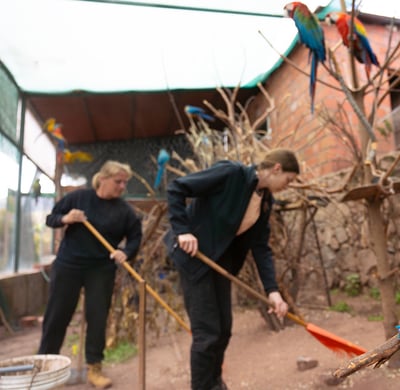
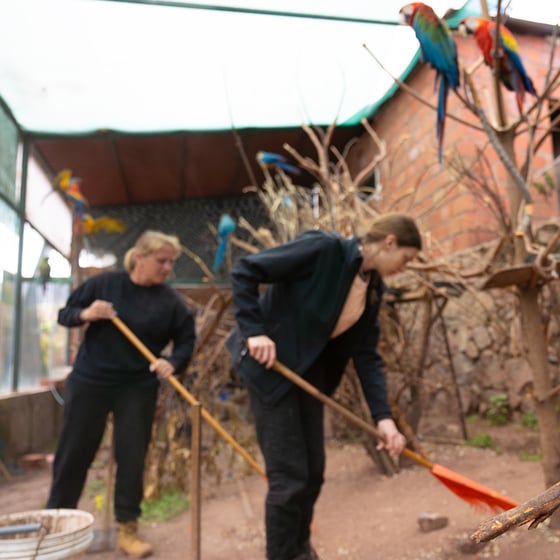
• Cleaning animal enclosures and common sanctuary areas
• Assisting with food preparation, including weighing and distributing diets for different species
• Supporting general maintenance around the sanctuary
• Helping repair or build enclosures and other site facilities
• Providing basic educational assistance to visitors when required, subject to seasonal availability
Since 2007, the sanctuary has provided a home for a variety of native wildlife, including animals affected by trafficking, inappropriate ownership and mistreatment. One of its areas of focus is the Andean Condor, an important native species whose population has been affected by human activity.
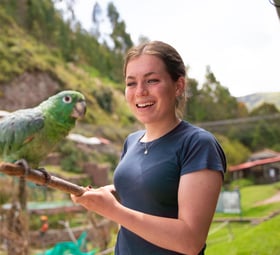
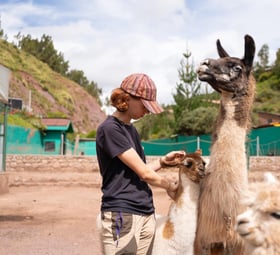
During your time at the sanctuary, you will encounter a range of rescued wildlife. Depending on the animals currently being cared for, this can include pumas, small bears, birds, foxes, turtles, monkeys, deer, alpacas, llamas and other native species. The sanctuary’s long-term goal is to rehabilitate rescued animals and release them back into their natural habitats.
If you are passionate about wildlife, this project provides an opportunity to contribute to the daily operation of a local rescue centre while learning more about the challenges facing native wildlife in Peru. As wildlife rescue centres often operate with limited government funding, volunteer assistance can provide valuable additional support. The work can be practical and messy, so volunteers are encouraged to bring older clothing and sturdy footwear.
OTHER THINGS TO CONSIDER VOLUNTEERING WITH WILDLIFE IN PERU
Return Airport Transfer - Your return airport transfer is not included in your Program Fee. The most common method is to use a ridesharing app or private taxi service. Participants can often be travelling across their final few days and therefore are not necessarily heading back to the airport directly from our accommodation. The costs depend on your method of transport and your final destination. This can often be split across multiple participants if you are travelling with someone else on the program.
Spanish Requirements - For the wildlife program in Peru, we recommend that you speak a reasonable level of Spanish prior to your trip. There are no specific language requirements in order to join the program and you can join as an absolute beginner. However, we find that the ability to speak a good level of the Spanish language and a passion to learn more will greatly enhance your overall experience. This is because English is generally not widely spoken and therefore our programs should be viewed as a broader language immersion experience. If you do not speak a reasonable level of Spanish then you will find it difficult to communicate. As a result, this could lead to a more frustrating experience.
We also offer Online Spanish Lessons that you can take before your trip. The lessons provide you with the opportunity to receive one-on-one classes from a trained Spanish teacher. Classes are held via Zoom and can be worked around your schedule back in your home country.
We also offer a learn Spanish in Peru program which you can take part in prior to your volunteer placement. This provides you with 20 hours-per-week of group Spanish lessons. Both of these options can be added during our online application process. They are highly recommended if you want to make the most of your volunteer placement.
Once you are in-country then you are also able to organise additional Spanish lessons directly with our local team. Volunteer feedback suggests that it can often be tiring to complete Spanish lessons at the same time as your volunteer programs in Peru. Consequently, we generally recommend extending your Language Immersion Program.
Animal Interaction - For safety reasons and in line with standard wildlife rehabilitation practices, direct handling and physical interaction with wild animals is limited. This is particularly important for species such as big cats, condors and primates. Any interaction with animals will be determined by the sanctuary team and, where appropriate, will take place under their supervision and guidance.