































Volunteer in South Africa with Animals

 Activities
 Rhino Conservation
 Elephant Conservation
 Antelope Conservation
 Southern Africa
 Animal
 Africa
 South Africa
 Lion Conservation
 Wildlife Conservation
 Southwest African Lion
Black Rhino
Southwest African Lion
Black Rhino
 White Rhino
 Giraffe Conservation
 African Leopard
 Leopard Conservation
 Anti Poaching
 African Elephant
 Hotspots
 Bush Elephant
Masai Giraffe
Bush Elephant
Masai Giraffe
 Planting Trees
 Tiger Conservation
Bengal Tiger
Tiger Conservation
Bengal Tiger
 Monkey Conservation
 Kruger National Park
 Cheetah Conservation
 South African Cheetah
 Zebra Conservation
 Impala
 Kudu
Kudu
 Buffalo Conservation
 African Buffalo
 Southern Giraffe
 Safari
 Shark Conservation
 Hyena Conservation
 Spotted Hyena
 Mountain Zebra
 Bushbuck
 Baboon
 Primate Conservation
 National Park
 Premium
 Caracal Conservation
 Meerkat Conservation
 Meerkat
 Vegan
Vegan
 Common Warthog
Warthog Conservation
Common Warthog
Warthog Conservation
 Caracal
Masai Lion
West African Lion
Caracal
Masai Lion
West African Lion
 Bird Conservation
Eland Antelope
Springbok
Bird Conservation
Eland Antelope
Springbok
 Plains Zebra
 Jackal Conservation
Black-backed Jackal
Jackal Conservation
Black-backed Jackal
 Hippo Conservation
South African Hippo
Black Wildebeest
Hippo Conservation
South African Hippo
Black Wildebeest
 Ray Conservation
 Vervet Monkey
 Mongoose
 Mongoose Conservation
 Wildcat Conservation
 Marine Life
Ostrich
Genet
Marine Life
Ostrich
Genet
 Owl
Owl
 Great White Shark
 Reptile Conservation
 Crocodile
 Mako Shark
 Capuchin Monkey
 Honey Badger
Badger Conservation
Honey Badger
Badger Conservation
 Waste Reduction
 Shark Tagging
 Beach Cleaning
Eagle Ray
Beach Cleaning
Eagle Ray
 Ragged Tooth Shark
 Hammerhead Shark
 Sting Ray
 Thresher Shark
 Leopardus Conservation
 Ocelot
 Whale Conservation
 Animal Sanctuary
 Animal Shelter
 African Penguin
Penguin Conservation
African Penguin
Penguin Conservation
 Marmoset
 Port Elizabeth
 Dolphin Conservation
Bush Baby
Dolphin Conservation
Bush Baby
 Cape Town
 African Wild Dog Conservation
 GVI Alternatives
Cape Wild Dog
Serval
GVI Alternatives
Cape Wild Dog
Serval
 Street Animals
 Dog
African Wildcat
Dog
African Wildcat
 Squirrel Monkey
 Tamarin
 Cats
Cats
 Lemur
Lemur
 Diving
 Nyala
Blue Wildebeest
Nyala
Blue Wildebeest
 Eagle
Eagle
 Tortoise Conservation
 Waterbuck
 Kangaroo Conservation
 Cockatoo
 Macaw
Macaw
 Giant Tortoise
 Parrot
 Duiker
 Blesbok
 Wallaby
 Sugar Glider Conservation
Sugar Glider
Sugar Glider Conservation
Sugar Glider
 Great Apes Conservation
 Chimpanzee
 Diving certificate
 Southern Right Whale
 Bottlenose Dolphin
Humpback Dolphin
Bottlenose Dolphin
Humpback Dolphin
 Humpback Whale
Brydes Whale
Brown Hyena
Blue Whale
Humpback Whale
Brydes Whale
Brown Hyena
Blue Whale
 Common Dolphin
 Intern Abroad
 Veterinary Training
 Elephant Research
Sumatran Tiger
Elephant Research
Sumatran Tiger
 Horse
Horse
 Pangolin Conservation
Elusive Pangolin
Pangolin Conservation
Elusive Pangolin
 Transvaal Lion
 Otter Conservation
 Giant Otter
 Bat
Bat Conservation
Bat
Bat Conservation
 Plettenberg Bay
 Macaque
Mona Monkey
Macaque
Mona Monkey
 Patas Monkey
Horse Trekking
Patas Monkey
Horse Trekking
 Horse Sanctuary
 Hiking
 Yoga
East African Wild Dog
Yoga
East African Wild Dog
 Knysna
 Manta Ray
 Orca
Orca
 Plastic Reduction
Long-beaked Common Dolphin
Fin Whale
Plastic Reduction
Long-beaked Common Dolphin
Fin Whale
 Tubulidentata Conservation
 Aardvark
 Northwest African Cheetah
 Ecological Farming
 Tanzanian Cheetah
Sea Otter
Horse Conservation
Tanzanian Cheetah
Sea Otter
Horse Conservation
 Bee Conservation
Beehive
Short-beaked Common Dolphin
Bee Conservation
Beehive
Short-beaked Common Dolphin
 Side-striped Jackal
 Amur Tiger
African Black Eagle
Amur Tiger
African Black Eagle
 Wolf Conservation
 Grey Wolf
 Pelagic Shark
 Husky
Husky
 Golden Jackal
 Chameleon
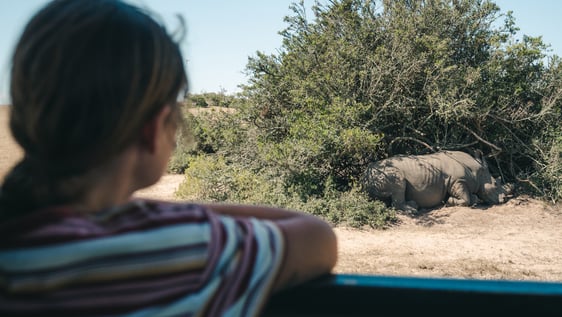


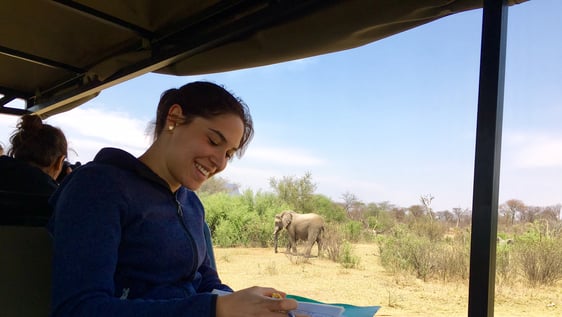


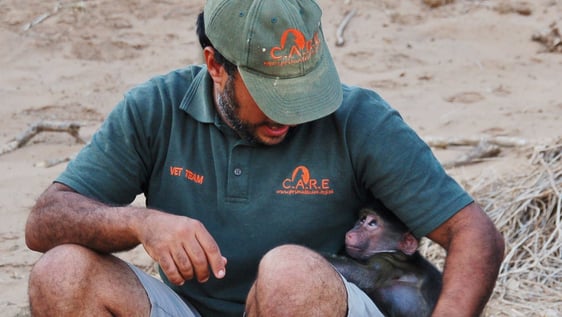

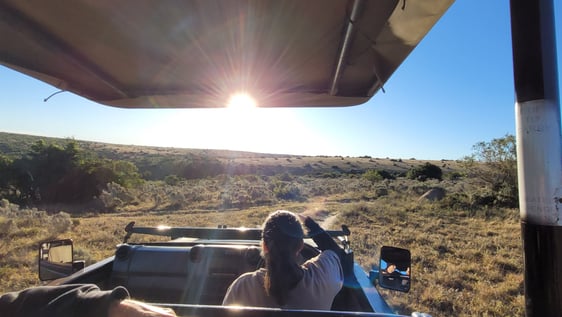


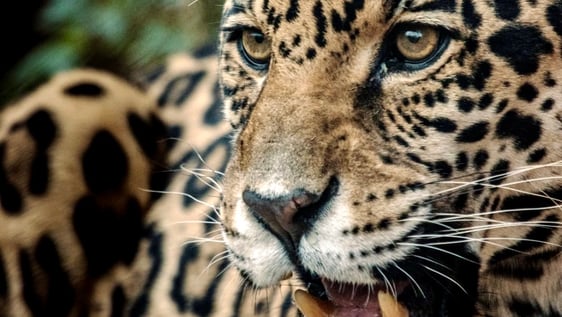

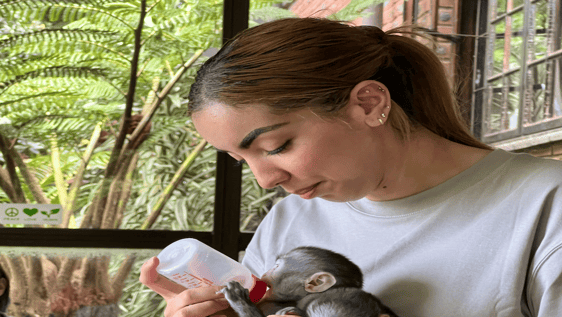
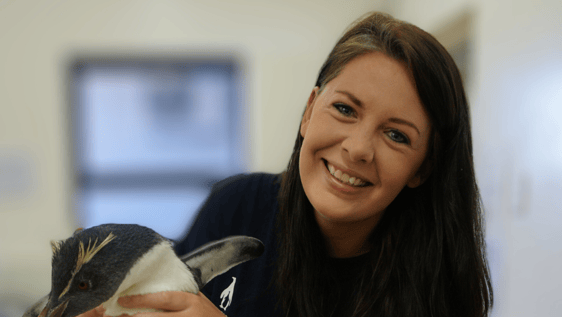


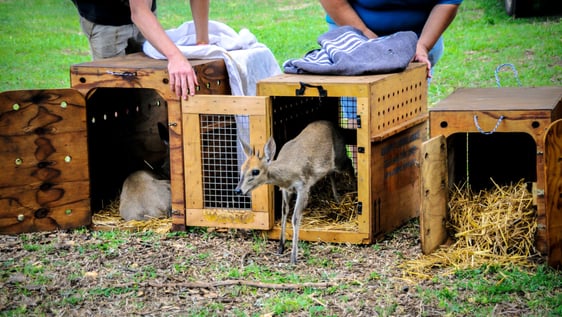
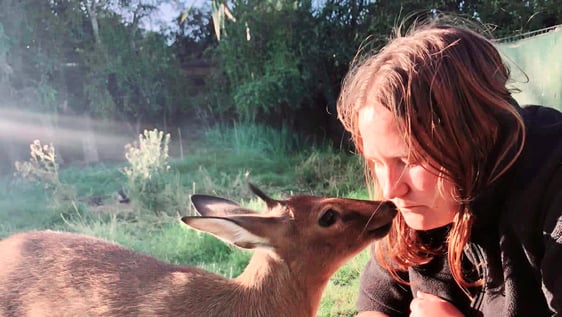







Animal conservation projects in South Africa
You may have heard of South Africa as the home of the “Big Five“ – the elephant, rhino, lion, leopard, and buffalo – but this spectacular country offers much more. From swift cheetahs sprinting across the savanna, to waddling penguins on Cape beaches, to awe-inspiring great white sharks offshore, your wildlife volunteering opportunities are truly limitless.
Since the end of apartheid in 1994, the country has put environmental conservation front and center. With 1,500+ protected areas and thousands of conservation projects, you can create real impact as you volunteer.
Dream of sunrise monitoring drives, bush camps under the Milky Way, or joining a shark research boat? South Africa combines high-impact conservation with unforgettable adventure.
🐾 South Africa Wildlife Guide: Big Five, Marine Life & Volunteer Opportunities
| Species | IUCN Status | Main Habitat | Volunteer Opportunities |
|---|---|---|---|
| African Elephant 🐘 | Vulnerable | Savanna, woodland | Herd ID, GPS tracking, conflict mitigation |
| Cape Buffalo 🐃 | Least Concern | Woodland savanna, wetlands | Population counts, health monitoring |
| Black & White Rhino 🦏 | Critically Endangered / Near Threatened | Grass- & shrublands | Anti-poaching support, dehorning logistics, track & sign |
| African Lion 🦁 | Vulnerable | Savanna, grassland | Pride monitoring, prey surveys, community outreach |
| African Leopard 🐆 | Vulnerable | Woodlands, escarpments | Camera traps, spoor ID, corridor mapping |
| Hippopotamus 🦛 | Vulnerable | Rivers, wetlands | Water sampling, wetland rehab, human-safety education |
| Cheetah 🐈⬛ | Vulnerable | Open plains, light woodland | Telemetry, fitness runs, release prep |
| Giraffe 🦒 | Vulnerable | Savanna, woodland | Vegetation plots, ID catalogues, translocation support |
| African Penguin 🐧 | Endangered | Coastal islands & beaches | Chick rearing, oiled-bird care, fish-stock data |
| Great White Shark 🦈 | Vulnerable | Coastal waters | Fin-ID photos, tagging logistics, public education |
South Africa Animal Conservation Status (2026)
South Africa is a biodiversity hotspot with outstanding mammal, bird, and reptile richness. Flagship parks such as Kruger National Park lead conservation efforts but face poaching pressure, habitat fragmentation, and funding gaps. Consistent volunteer support keeps monitoring continuous and data reliable.
South Africa Wildlife: Big Five & Exotic Animals You Can Volunteer With
🐘 African Elephant — Facts, Regions, Practical Volunteering
Key facts: Ecosystem engineers that open up savanna mosaics by pushing trees; complex matriarchal herds; long-distance water memory.
Where to volunteer/see: NE reserves around elephant conservation programs, Limpopo & Mpumalanga; also KwaZulu-Natal. Best seasons: Dry season (Jun–Oct) for visibility near water.
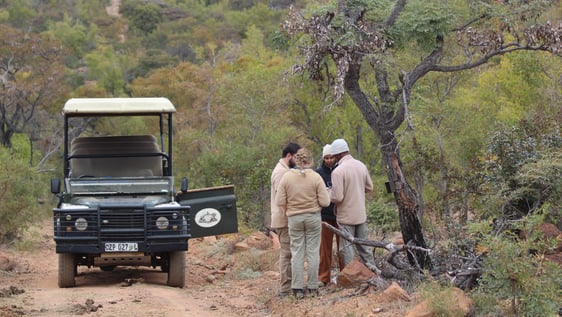
Typical tasks: Herd ID (ear tears, tusk shape), distance sampling on game drives, GPS waypoint logging, crop-raiding early-warning with communities, waterhole checks.
Ethics & safety: Keep vehicle distance; no feeding; support fencing solutions that allow wildlife corridors.
🐃 Cape Buffalo — Herd Dynamics & Field Tasks
Key facts: Large, protective herds; can run ~56 km/h; disease interfaces with cattle require vigilant monitoring.
Where: Mixed savannas in the northeast and Eastern Cape; Addo region has strong populations.
Tasks: Dawn/dusk counts, sex/age structure recording, dung transects for parasite checks, waterpoint biosecurity support.
Safety: Never approach on foot; respect rangers’ line-of-sight instructions.
🦏 Rhino Conservation — Anti-Poaching & Monitoring
Key facts: Black rhino (browsers, hooked lip) vs. white rhino (grazers, wide mouth). Black rhino are critically endangered.
Where: Historic strongholds in KZN and the northeast; private reserves with intensive protection units.
Tasks: Track & sign (middens, scrapes), telemetry on known individuals, gate & fence integrity checks, dehorning logistics (non-hands-on), night patrol support.
Ethics: Zero location sharing on social media; follow strict opsec to avoid tipping off poachers. Explore rhino conservation projects for vetted options.
🦁 African Lion — Pride Monitoring & Conflict Mitigation
Key facts: Social cats in prides; apex role stabilizes herbivore populations; identifiable via whisker spot patterns.
Where: Greater Kruger landscapes, Kalahari edges, and select Eastern Cape reserves.
Tasks: Pride ID catalogues, kill-site verification, call-up surveys (with pros), camera-trap management, farmer consultations for boma-building and predator-proofing.
Ethics: No cub-petting; avoid facilities that breed for interaction. Choose ethical lion conservation projects only.
🐆 African Leopard — Camera Traps & Corridors
Key facts: Elusive, mostly nocturnal; key competitor to lions/hyenas; cache kills in trees.
Where: Sabi Sands/Greater Kruger; Drakensberg escarpment; Cape mountains (lower densities).
Tasks: Camera-trap deployment & SD-card rota, spoor transects, conflict mapping (livestock incidents), corridor design with GIS basics. Learn more via leopard conservation projects.
🦛 Hippopotamus — Wetland Health & Water Quality
Key facts: Semi-aquatic; spend ~16 h/day in water; pivotal nutrient cyclers but sensitive to river abstraction & pollution.
Where: iSimangaliso Wetland Park (St Lucia), Kruger river systems, Limpopo wetlands.
Tasks: Water sampling (pH/DO/turbidity), bank erosion plots, human-safety signage, night movement observations from safe vantage points.
Safety: Keep distance at water edges; never block hippo water access.
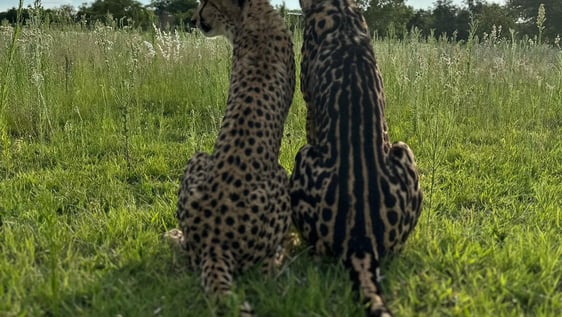
🏁 Cheetah — High-Speed Specialist, Genetic Stewardship
Key facts: Sprint specialists; high cub mortality; competition from lions/hyenas; genetic bottlenecks in small populations.
Where: Kgalagadi edges, select private reserves (Limpopo/Northern Cape), reintroduction landscapes.
Tasks: Telemetry tracking, enrichment runs in rehab (under staff lead), prey surveys, soft-release boma checks, post-release fixes. See cheetah conservation programs.
🦒 Giraffe — Browsing Ecology & Translocations
Key facts: Tallest land mammal; selective browsers (acacias, combretum); tongue ~45 cm; vital seed dispersers.
Where: Greater Kruger, Madikwe, Limpopo reserves.
Tasks: Photo-ID (coat patterns), browse pressure surveys, vegetation plots, dart site logistics during translocations.
Ethics: Quiet behavior near capture ops; follow vet instructions strictly.
🐧 African Penguin — Colony Care & Ocean Health
Key facts: Endemic to SA/Namibia; indicators of small pelagic fish stocks (sardine/anchovy); threatened by prey shifts & oiling.
Where: Rehabilitation centers near Cape Town and selected colonies on the Cape coast.
Tasks: Chick feeding & weighing, oiled-bird cleaning protocols, beach patrols for stranded birds, prey distribution data (citizen science). Explore penguin conservation projects to join.
🦈 Great White Shark — Fin-ID & Public Education
Key facts: Apex predators; sightings can be seasonal/variable; research focuses on fin-ID, movement ecology, prey dynamics.
Where: Gansbaai, False Bay, Mossel Bay (seasonal variability by year).
Tasks: Fin-ID photo catalogues, dorsal/caudal notch scoring, environmental data logging (SST, visibility), public briefings on shark-safe behavior. Join marine conservation projects or specialized great white shark research programs.
Why South African Wildlife Is Endangered (Causes & Threats)
- Habitat Loss & Fragmentation: Settlements, roads, agriculture shrink ranges; corridors become critical.
- Illegal Wildlife Trade: Rhino horn, ivory, big-cat parts, shark fins drive poaching even under strict laws.
- Human-Wildlife Conflict: Predators vs. livestock; elephants vs. crops → needs coexistence tools & community buy-in.
- Climate Variability: Droughts concentrate wildlife at waterholes → disease & conflict risks rise.
Volunteer Projects & Conservation Efforts in South Africa
Choose vetted, ethical projects with clear data goals, qualified staff, and community links. Your time fuels long-term datasets (camera traps, telemetry), supports rangers, and strengthens coexistence programs.
✅ How to Choose an Ethical Wildlife Project
- 🐾 No exploitation: No cub-petting, no breeding for interaction.
- 📊 Data & impact: Clear monitoring goals (ID catalogues, telemetry, prey surveys).
- 👩🔬 Qualified staff: On-site biologists/rangers supervise volunteer tasks.
- 🤝 Community link: Projects that engage local farmers & schools have lasting impact.
- 🔁 Transparency: Clear breakdown of how fees fund field ops, staff, fuel, equipment.
🎒 Field Gear Checklist (savanna & coast)
- 🧢 Neutral clothing (khaki/olive), hat, light layers.
- 🥾 Closed hiking shoes; sandals for camp only.
- 🧴 High-SPF sunscreen, lip balm, insect repellent.
- 🔭 Binoculars (8×42), headlamp (red mode preferred).
- 📋 Waterproof notebook; power bank; dry bag for boat days.
- 💧 1–2 L refillable water bottle.
🛡️ Safety & Etiquette
- 🚙 Stay in vehicle unless instructed; keep distances; no sudden movements/noise.
- 🍔 No feeding; store food securely in camp; respect night-time rules.
- 🌊 Marine: follow skipper briefings; secure cameras; mind lines & hooks.
- 📵 No sensitive geo-tagging (rhino/lion den sites) on social media.
🙋 Frequently Asked Questions: Volunteering with Animals in South Africa
The best ethical lion volunteering projects are in the Greater Kruger area and select reserves in the Eastern Cape. These programs focus on pride monitoring, data collection, and coexistence with farmers.
June–October is the best season because elephants gather at waterholes, making observation and data collection easier. Wet season is greener but visibility is lower.
Apply through vetted rhino conservation projects that include tracking, telemetry data collection, and anti-poaching support. Locations include Kruger, KwaZulu-Natal, and private game reserves.
Yes – cheetah conservation projects in Limpopo and Northern Cape offer telemetry tracking, enrichment runs, and release preparation under professional supervision.
Volunteer programs near Cape Town focus on great white shark research, penguin rehabilitation, beach clean-ups, and data collection on dolphins and whales.
Wildlife volunteer programs start at around €25 per day including accommodation, training, and support. Prices vary by species focus and location. Compare options and reviews on Volunteer World for transparent pricing.
Many nationalities get a free 90-day visitor visa on arrival. For longer stays, you may need to apply for a volunteer visa at the South African embassy.
You will learn wildlife tracking, camera trap setup, species ID, data logging, and conservation management—skills valuable for ecology careers.
Pack neutral-colored clothing, closed shoes, hat, sunscreen, insect repellent, binoculars, and a reusable water bottle. Avoid bright colors that may disturb wildlife.
Greater Kruger National Park, KwaZulu-Natal reserves, and Eastern Cape private game reserves offer Big Five research, monitoring, and conservation projects.