







































































Sea Turtle Volunteer in Costa Rica

 Sea Turtle Conservation
 Activities
 Central America
 Costa Rica
 Americas
 Animal
 Marine Life
 Leatherback Turtle
 Green Sea Turtle
 Waste Reduction
 Sloth Sanctuary
 Plastic Reduction
 Scouts
 Olive Ridley Turtle
 Vegan
Vegan
 Beach Cleaning
Two-toed Sloth
Three-toed Sloth
Beach Cleaning
Two-toed Sloth
Three-toed Sloth
 Wildlife Conservation
 Yoga
Yoga
 Hawksbill Turtle
Kemps Ridley Turtle
Hawksbill Turtle
Kemps Ridley Turtle
 Hotspots
 Surfing
 Loggerhead Turtle
 Limon
Limon
 Families with small kids
 Horse
Natural Horsemanship
Horse
Natural Horsemanship
 Monkey Conservation
Flatback Turtle
Monkey Conservation
Flatback Turtle
 Spider Monkey
 Spanish Courses
 Voluntourism
 Intern Abroad
 Language Course
 Volunteer and Travel
 Galapagos
 Machu Picchu
 Nursing Internship
 Ocean Cleaning
 Jaguar Conservation
 Environment
 Conservation Work
 National Park
Pantanal Jaguar
National Park
Pantanal Jaguar
 Capuchin Monkey
 Mangrove
Plant Conservation
Mangrove
Plant Conservation
 Reptile Conservation
 Crocodile
 Butterfly Conservation
 Insect Conservation
 Reforestation
 San Jose
 Bird Conservation
 Bear Conservation
 Otter Conservation
 Caiman
 Howler Monkeys
Kinkajou
North American River Otter
Howler Monkeys
Kinkajou
North American River Otter
 Toucan
 Tamarin
 Ocelot
 Parrot
 Planting Trees
 Sloth Bear
 Tapir Conservation
 Leopardus Conservation
Mexican Jaguar
Leopardus Conservation
Mexican Jaguar
 Macaw
Tapir
Macaw
Tapir
 Shark Conservation
 Marine Conservation
 Blacktip Reef Shark
 Tortoise Conservation
 Whitetip Reef Shark
 Hammerhead Shark
 Giant Tortoise
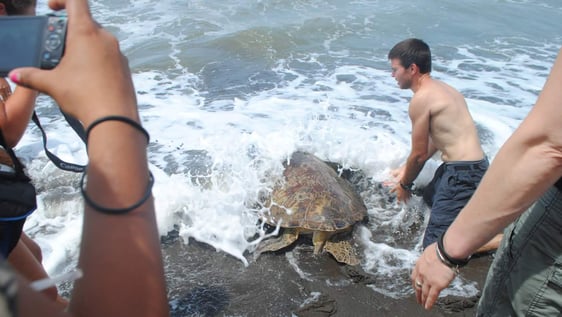





















Volunteer for Sea Turtle Conservation in Costa Rica
A global biodiversity hotspot, Costa Rica boasts essential nesting sites for four of the world's seven sea turtle species. With two coastlines (Pacific in the west and Caribbean in the east), this small Central American country attracts hundreds of thousands of endangered sea turtles that come ashore to lay eggs each year. Beach-loving volunteers can support this spectacle by joining a sea turtle conservation program.
With over 25% of its land protected as National Parks and Reserves, Costa Rica is a pioneer in environmental protection. Because the four sea turtle species using Costa Rica's beaches are vulnerable or endangered, turtle conservation is a national priority.
Since sea turtles are a major eco-attraction, your time as a Costa Rica turtle volunteer benefits wildlife and local communities that earn income through ecotourism.
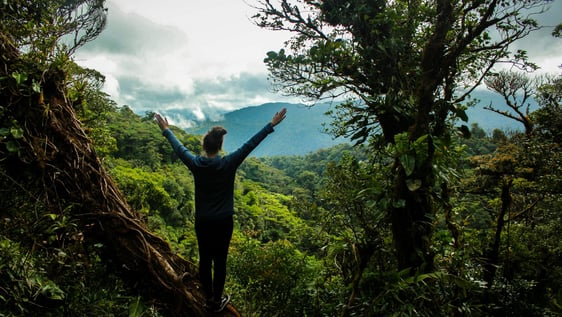
Explore lush jungle, wild beaches, and abundant wildlife while volunteering for a good cause. Join a sea turtle conservation program in Costa Rica.
Essential Country Information
- Capital: San Jose
- Population: ~5 million
- Language: Spanish
- Currency: Costa Rican Colon (CRC) Approx: 1 USD = 500 CRC
- Time Zone: UTC-06:00
Weather and Climate
Costa Rica is tropical. Most lowland areas average about 22-27 C (71-81 F) year-round. Coolest months: November to January. Warmest months: March to May. San Jose (about 1170 m elevation) averages about 21 C (69 F).
Why Volunteer for Sea Turtle Conservation in Costa Rica?
Sea turtles spend most of their lives in the ocean, but females return each year to the same beaches where they hatched to lay eggs. Costa Rica's shores host nesting sites for four species:
- Leatherback turtles
- Green turtles
- Hawksbill turtles
- Olive ridley turtles
Turtles are vulnerable when on land. Poachers target eggs and adults for meat, skin, or shells, and slow reproduction makes recovery difficult.
Sea Turtle Species in Costa Rica
Leatherback Turtle
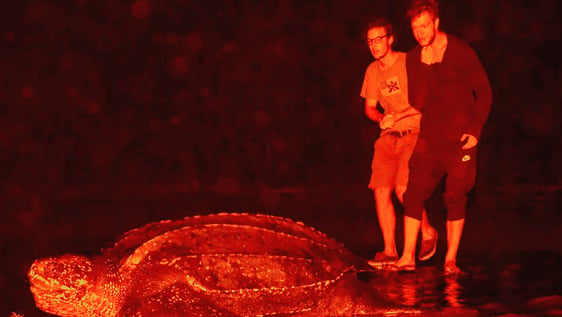
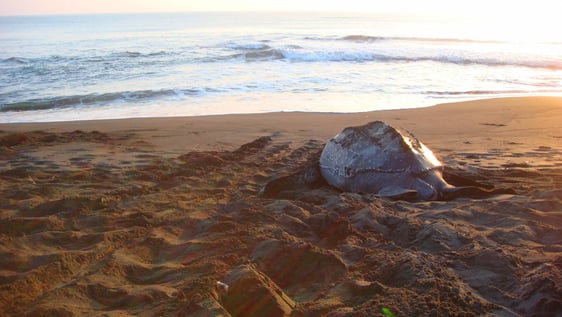
The leatherback is the largest sea turtle (up to about 160 cm and 680 kg) and has a soft, leather-like shell. In Costa Rica, leatherbacks nest on the Pacific coast roughly September to March and on the Caribbean coast roughly March to July. They are deep divers and rarely seen at the surface offshore.
Green Sea Turtle
Named for the color of body fat rather than shell, greens can reach about 120 cm and 180+ kg. Mostly herbivores, they graze seagrass and algae. On Costa Rica's Caribbean coast, peak nesting is roughly June to October. Tortuguero National Park is one of the most important green turtle rookeries in the Western Hemisphere.
Hawksbill Turtle
Recognizable by a hawk-like beak and colorful shell, hawksbills are smaller (about 89 cm). They favor coral reefs and feed on sponges and other invertebrates. In Costa Rica they nest sparsely on Caribbean beaches around September to October.
Olive Ridley Turtle
The olive ridley is the smallest commonly seen species in Costa Rica (to about 70 cm). Famous for mass nestings called arribadas, when thousands of females emerge together to lay eggs. Ostional on the Nicoya Peninsula is known for these events.
Why Are Sea Turtles in Costa Rica Endangered?
Threats are both natural and human-driven. Turtles mature slowly and few hatchlings survive to adulthood. Key human-related threats include:
- Illegal poaching of adults
- Egg collection
- Habitat destruction on nesting beaches
- Fisheries bycatch
- Plastic and marine debris
- Climate change (storms, sea-level rise, sand temperature)
Illegal Poaching
Despite protections, illegal take persists in some areas for meat and shell. Protected areas and patrols reduce risk but cannot cover every beach.
Egg Collection
Turtle eggs are valued as food in some communities. Most beaches have strict bans and use guarded hatcheries to protect clutches. Ostional has a regulated, limited harvest during early arribadas, but enforcement remains essential.
Habitat Destruction
Coastal development, lights on beaches, bonfires, and vehicles can destroy nests or disorient hatchlings. Offshore, coral reef decline from warming and pollution reduces feeding habitat.
Fisheries Bycatch
Trawl nets, gillnets, and longlines can entangle turtles. Wider use of turtle-friendly gear and safe release training helps.
Plastics Pollution
Marine plastics persist for decades. Turtles may ingest plastic bags mistaken for jellyfish, causing injury or death. Beach cleanups and reducing single-use plastic are priorities.
Climate Change
Higher sand temperatures skew sex ratios toward females and stronger storms can erode nests. Coral bleaching reduces forage areas.
Why Is Sea Turtle Conservation in Costa Rica Important?
Turtles help keep marine ecosystems healthy: leatherbacks reduce jellyfish, greens maintain seagrass, hawksbills help coral reefs by eating sponges. Conservation also supports sustainable livelihoods through ecotourism.
Laws and parks exist, but resources are limited. Volunteer support strengthens monitoring, hatchery work, beach patrols, data collection, community education, and cleanups.
Where Can I Volunteer for Costa Rica Sea Turtle Conservation?
Projects operate on both coasts. Popular areas include Tortuguero (Caribbean), the Osa Peninsula and Nicoya/Ostional (Pacific), plus other Pacific and Caribbean sites. Work is usually beach based: nest protection, hatchery operations, patrols, and education.
When Is the Best Time To Volunteer With Sea Turtles in Costa Rica?
Timing depends on species and coast.
Caribbean Coast (example windows)
- Leatherback: nest roughly Mar-Jun; hatch roughly Apr-Jul
- Green: nest roughly May-Aug; hatch roughly Jun-Sep
- Hawksbill: nest roughly Jun-Oct; hatch roughly Jul-Nov
Pacific Coast (example windows)
- Olive ridley: nest roughly Jul-Dec; hatch roughly Aug-Feb
- Green: nest roughly Sep-Jan; hatch roughly Nov-Feb
- Leatherback: nest roughly Oct-Feb; hatch roughly Nov-Mar
You can generally find projects year-round by choosing location and species accordingly.
What Will I Do as a Sea Turtle Volunteer in Costa Rica?
Typical tasks:
- Night beach patrols to find nesting females and protect nests
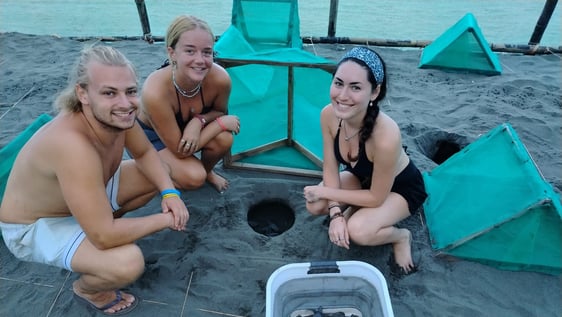
- Relocating at-risk clutches to hatcheries
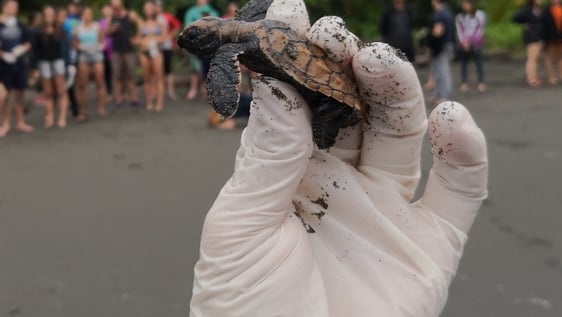
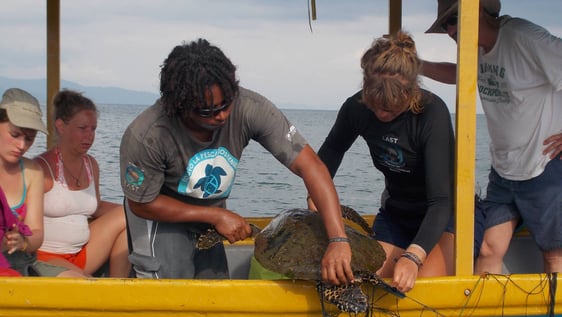
- Guarding hatcheries and releasing hatchlings safely
- Collecting data, tagging, and basic monitoring
- Beach cleanups and public education
- Maintaining facilities and equipment
Note: You will not touch turtles unless instructed by trained staff.
Volunteer Voices
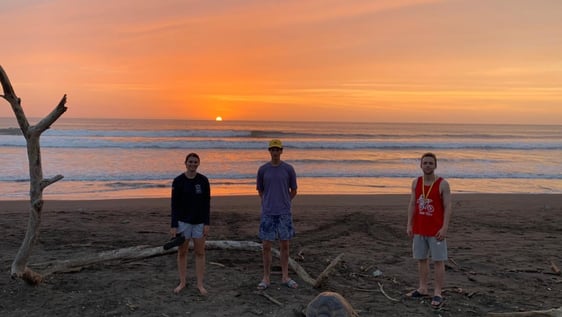
Many volunteers describe cultural immersion, improved Spanish, and perspective shifts from working at night, collaborating with local teams, and witnessing hatchling releases.
5 Benefits of Joining a Costa Rica Turtle Conservation Project
- Nature immersion: Beaches, rainforest, and wildlife in one of the world's most biodiverse countries.
- Hands-on experience: Fieldwork with biologists and conservation staff.
- Career value: Teamwork, resilience, data skills, and conservation experience for your CV.
- Language and culture: Practice Spanish and engage with local communities.
- Personal growth: Build confidence, try surfing or hiking, and explore national parks.

EVALUATED NE
DEFICIENT DD
CONCERN LC
THREATENED NT
ENDANGERED CR
IN THE WILD EW